
The school reception area has a unique job.
It welcomes families, directs visitors, supports administrative staff, and often becomes the first physical impression someone has of the school. Because of that, cleanliness in reception is not just about appearance. It also involves organization, high-touch surfaces, floors, waiting areas, and the small details people notice while they are standing at the front desk.
For schools arranging school cleaning in Simsbury, reception areas deserve a cleaning routine designed around traffic, visibility, and daily use.
Think Like a Visitor
A useful way to evaluate reception cleanliness is to enter the building as though you have never been there before.
Look at what is immediately visible.
Is the entry floor marked or dusty? Are fingerprints noticeable on glass? Does the reception desk appear cluttered? Are chairs arranged neatly? Are waste bins overflowing? Are door handles clean?
These details can shape how visitors perceive the condition of the rest of the facility.
A cleaning plan should therefore prioritize the surfaces and areas that visitors encounter first.
The Reception Floor Is a Daily Story
Floors often reveal how heavily a school is being used.
During wet or muddy weather, entrance areas can collect moisture and tracked-in debris quickly. Even during dry conditions, foot traffic can bring dust and dirt through the main entrance.
A practical routine should account for the school’s traffic patterns rather than relying on the same cleaning frequency every day.
Entrance mats should also be inspected regularly. A mat that is saturated with dirt cannot perform its intended job effectively.
The Front Desk Needs More Than Dusting
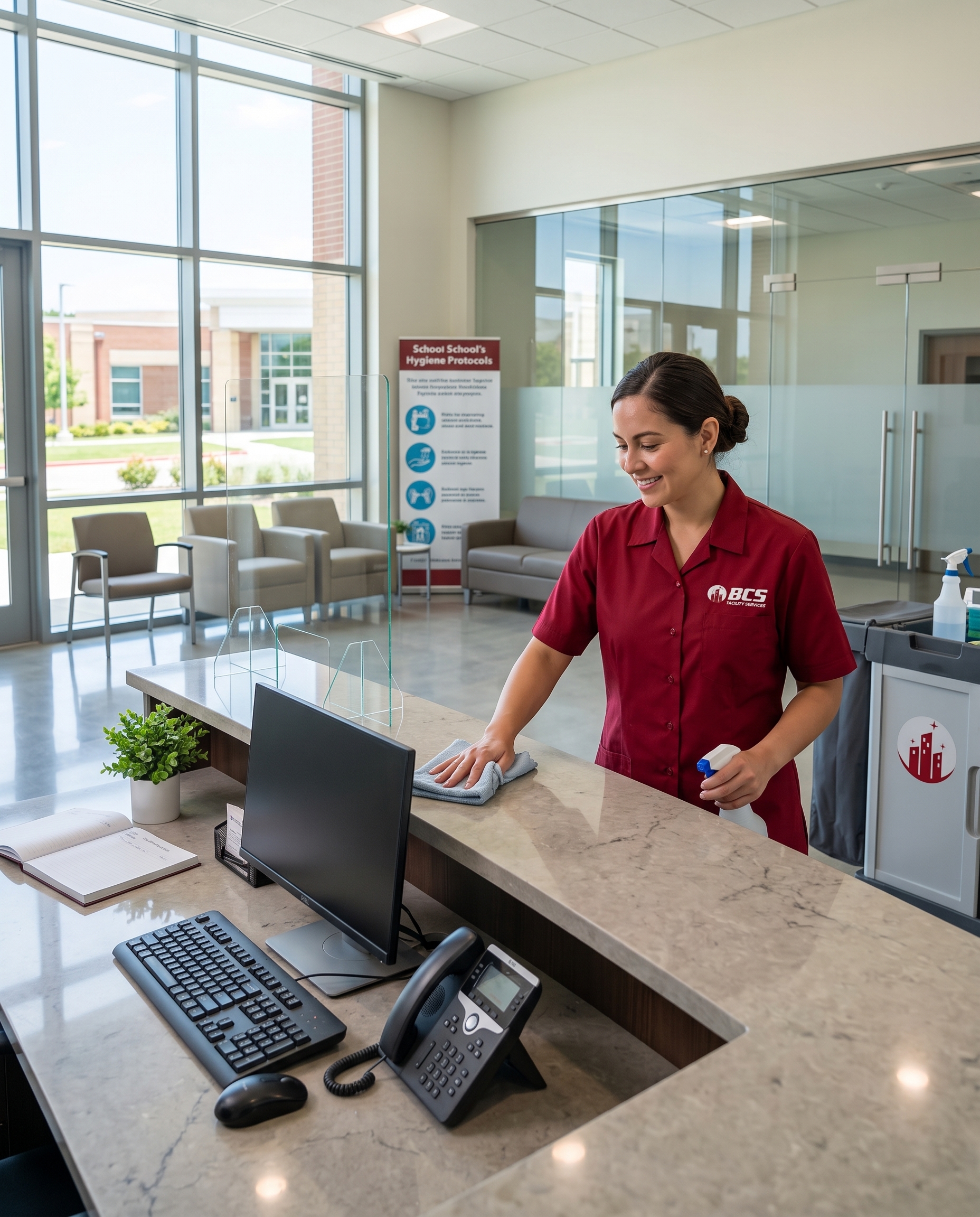
The reception desk contains multiple surfaces that may receive frequent contact.
Depending on the layout, these can include:
-
Countertops
-
Visitor sign-in areas
-
Pens and shared writing surfaces
-
Counter edges
-
Phones
-
Door handles
-
Chairs
-
Communication devices
The cleaning process should distinguish between surfaces that can be cleaned routinely and electronic equipment that requires specialized handling.
Keeping the front desk presentable also means working around staff belongings and paperwork without disturbing important materials.
Glass Creates a Fast Visual Check
Glass doors and interior windows can make a reception area appear brighter and more welcoming—but fingerprints are equally noticeable.
Smudges around door handles and frequently touched sections of glass may accumulate quickly.
Rather than treating all glass as a once-a-week task, facility managers can identify the sections that require more frequent attention based on traffic.
This is a simple example of why cleaning frequency should follow usage.
Waiting Areas Deserve Their Own Routine
Reception seating is often overlooked because chairs and benches appear clean from a distance.
A closer inspection can reveal dust along edges, debris beneath seats, marks on chair legs, or buildup in corners.
Furniture should be cleaned according to its material. Upholstered seating may require a different schedule from plastic or hard-surface chairs.
The floor underneath the seating area also needs attention. Moving furniture when practical allows cleaners to address spaces that otherwise become collection points for dirt.
Don’t Forget the Small Details
Some of the most noticeable reception problems are surprisingly minor.
A dusty information stand, fingerprints on a door plate, a full wastebasket, or a crooked row of chairs can make a clean room appear neglected.
Facility managers can include these details in reception inspections so they become part of the routine rather than something addressed only after a visitor complains.
Build a Reception “Reset”
A useful strategy is to divide reception cleaning into three moments.
Before the School Day
The entrance, floors, front desk surroundings, waiting area, and high-touch surfaces should receive attention before visitor traffic increases.
During the Day
Visible issues should be addressed as they arise, particularly spills, tracked-in debris, overflowing waste, or noticeable marks in high-traffic areas.
After Peak Traffic
The area can receive a more thorough reset, including floors, seating areas, touchpoints, and other surfaces that experienced heavy use.
This approach keeps the reception area presentable without requiring every task to happen at the same time.
Make the Reception Area Part of the Cleaning Agreement
When choosing a cleaning contractor, schools should avoid vague instructions such as “clean the front office.”
Instead, identify the specific expectations.
Does the service include glass doors? Reception seating? Floors beneath furniture? High-touch points? Waste removal? Periodic detailed cleaning?
Burgos Cleaning can help schools establish cleaning routines that account for the individual layout and daily demands of reception areas.
The First Impression Starts Before the Greeting
A receptionist can provide a warm welcome, but the physical environment speaks first.
A clean floor, organized waiting area, clear glass, maintained furniture, and tidy reception desk create a more orderly setting for students, families, employees, and visitors.
For schools looking for school cleaning in Simsbury, the reception area should be treated as a high-visibility zone with its own cleaning priorities—not simply another room on the checklist.
With Burgos Cleaning, schools can build a practical cleaning routine that gives reception areas the consistent attention they need throughout the school year.