

A newly completed renovation should look fresh, polished, and ready for use. Yet the cleaning process that follows construction can present its own challenges. New flooring, countertops, cabinetry, glass, fixtures, painted walls, and other finishes may be more vulnerable to scratches, stains, moisture, or improper cleaning techniques.
That is why construction cleanup requires more than simply removing dust and debris. Professional cleaners must consider the condition and material of each surface before choosing how to clean it.
For homeowners and property managers in Meriden, understanding how surfaces are protected during cleanup can help ensure the finished project maintains its appearance.
Identifying Surfaces Before Cleaning
One of the first steps in a careful construction cleanup is determining what materials are present. A newly installed hardwood floor should not necessarily be treated the same way as tile, vinyl, stone, or carpet.
The same principle applies to countertops and cabinetry. Natural stone, engineered materials, painted wood, laminate, and other finishes may have different care requirements.
Professional cleaners can assess surfaces before beginning detailed work. This helps reduce the possibility of using an inappropriate product, excessive moisture, or an overly aggressive cleaning method.
Protecting Newly Installed Flooring
Floors often experience significant exposure during construction. Workers, tools, ladders, boxes, and building materials can leave behind dust and debris.
During cleanup, loose particles should be removed carefully rather than dragged across the surface. Fine grit can act like an abrasive when pushed across certain flooring materials.
Cleaning methods should also take the flooring type into account. Excess moisture, harsh chemicals, or abrasive equipment may be unsuitable for some newly installed surfaces.
Extra care around corners, transitions, thresholds, and flooring edges can also help prevent accidental damage while cleaning.
Caring for Freshly Finished Cabinets
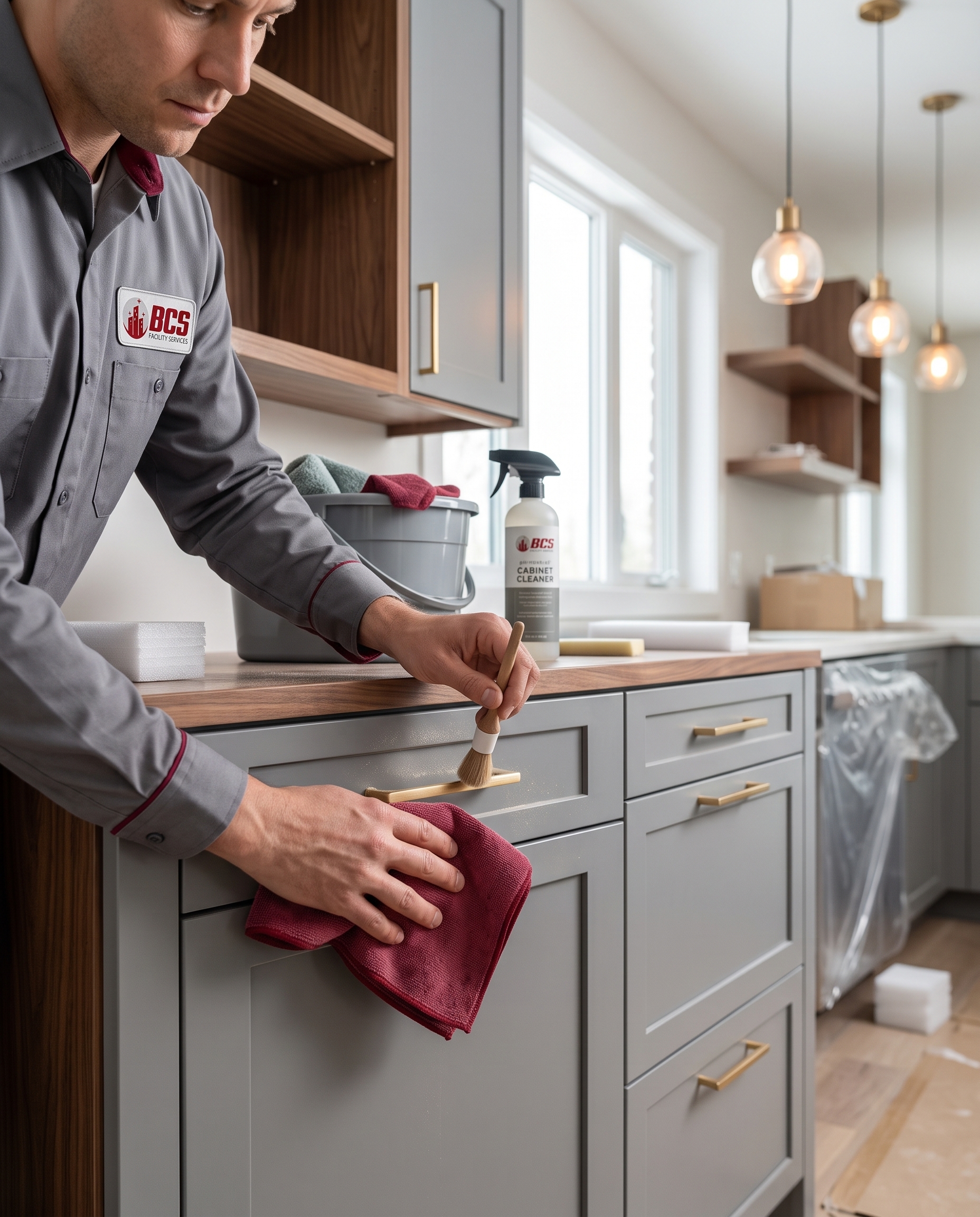
New cabinetry can collect dust during installation, particularly around hinges, handles, shelves, drawer interiors, and seams.
A gentle cleaning approach is important because newly finished cabinet surfaces may still show marks easily. Cleaners should avoid unnecessarily abrasive materials and use products appropriate for the finish.
Cabinet interiors should also be checked before they are filled with dishes, supplies, clothing, or other belongings. Removing construction dust at this stage can make the finished storage areas more practical to use.
Preserving Countertops and Fixtures
Countertops are another area where construction residue can accumulate. Dust, adhesive, caulk, fingerprints, and other marks may remain after installation.
Different countertop materials require different approaches. A cleaning method suitable for one surface may not be appropriate for another.
Fixtures such as faucets, handles, sinks, and hardware also deserve careful treatment. Using the correct tools and cleaning products can help reduce the risk of scratching finishes or leaving behind chemical residue.
Taking Extra Care With Glass
Glass can quickly show the effects of construction. Fine dust, fingerprints, labels, adhesive, and other residue may make newly installed windows, mirrors, and glass doors look less than finished.
Professional cleaning should address the glass without unnecessarily scratching it. Abrasive materials and improper scraping techniques can create permanent marks.
Frames, sills, and tracks should also be cleaned carefully because debris in these areas can be transferred back onto the glass.
Protecting Fresh Paint and Delicate Finishes
Painted walls and trim require thoughtful handling after construction. Even when paint appears dry, aggressive scrubbing may affect the finish.
Rather than treating every wall in the same way, cleaners can consider the type and condition of the painted surface. Dust removal should be performed gently, with particular care around corners, trim, doors, and recently finished areas.
This is especially important when cleaning follows a renovation where multiple trades have worked in the same space.
Why Technique Matters as Much as Equipment
Professional construction cleaning is not simply about having stronger cleaning products or specialized equipment. Technique plays an equally important role.
Using the right amount of pressure, selecting suitable tools, controlling moisture, and changing cleaning materials when necessary can help protect newly completed surfaces.
A careful process also reduces the chance that construction debris will be moved from one surface to another during cleaning.
A Safer Finish for Meriden Properties
Construction cleanup should enhance a newly completed property rather than create new problems. Careful surface assessment, appropriate cleaning methods, and attention to material-specific requirements can help preserve the appearance of new finishes.
For property owners seeking post-construction cleaning in Meriden, choosing a professional cleaning approach can help address construction dust and residue while giving newly installed surfaces the careful treatment they deserve.
The goal is not simply to make a property look clean. It is to complete the transition from construction site to finished space while protecting the work that has already been completed.