

The final nail may be in place, the paint may be dry, and the contractors may have packed away their equipment, but a newly renovated or constructed property still has one important stage ahead: detailed cleaning.
Construction can leave behind fine dust, small particles, packaging, fingerprints, residue, and debris in places that are easy to miss. Instead of treating the entire property as one large cleaning project, a room-by-room approach provides a practical way to identify what needs attention before the space is occupied.
For homeowners, contractors, property managers, and businesses in Canton, this process can help turn a recently completed project into a polished, usable environment.
Entryways and Hallways
The entryway often receives heavy traffic during construction, making it a natural starting point for cleanup. Dust and debris can accumulate around doorways, corners, baseboards, and flooring.
Cleaning should include doors, handles, trim, light switches, walls, and accessible areas around the entrance. Hallways deserve similar attention, particularly along flooring edges and baseboards where construction dust tends to settle.
A thorough first pass through these areas can also prevent remaining particles from being carried into already-cleaned rooms.
Kitchen Areas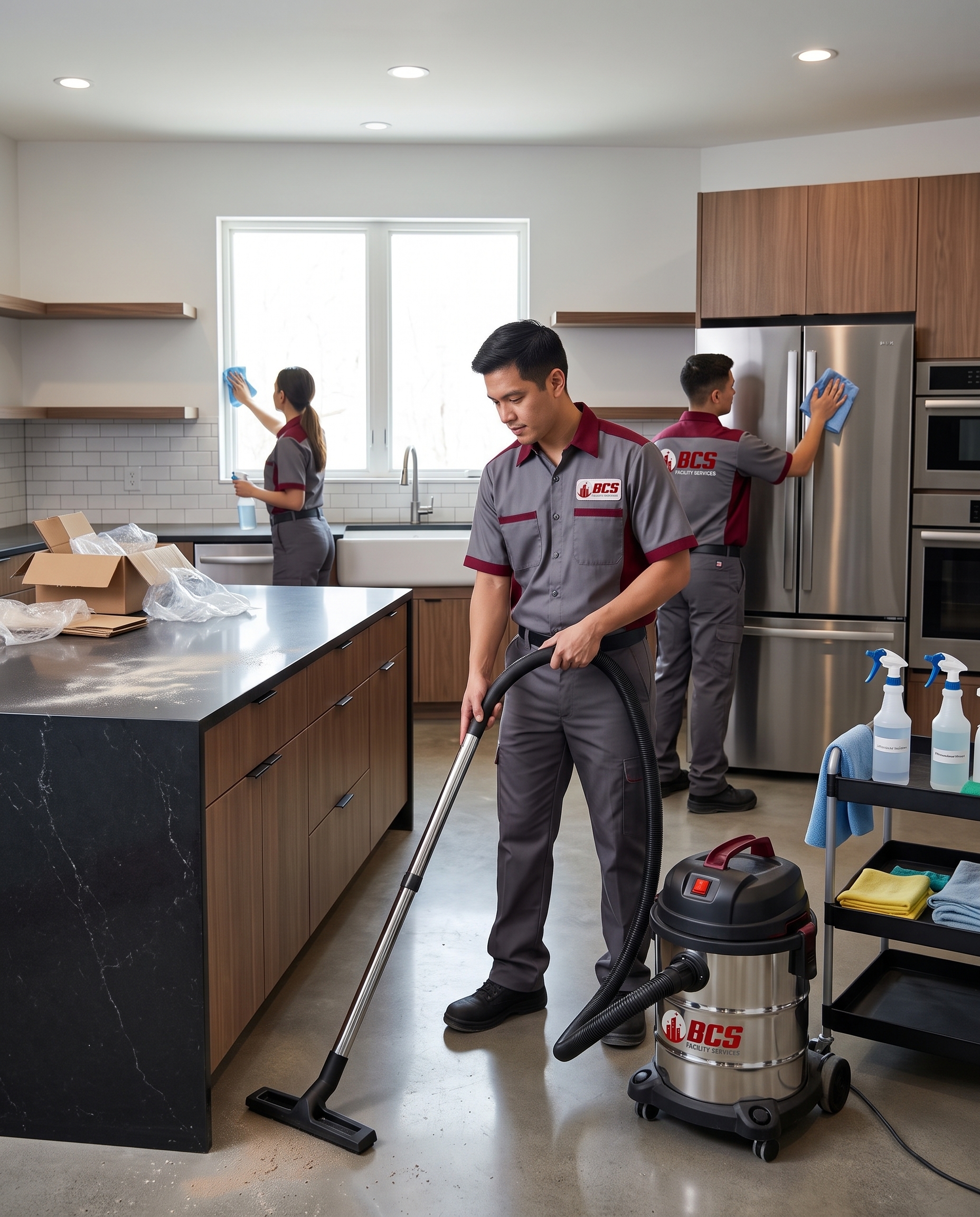
Renovated kitchens require attention to both visible and hidden surfaces. Cabinet shelves and drawers may contain fine dust from installation work, while countertops, backsplashes, sinks, and fixtures can have fingerprints or residue.
Appliance surfaces should be checked for protective films, labels, dust, and construction-related marks. Floors should receive detailed cleaning around cabinet edges, corners, and other areas that may have been difficult to access while workers were present.
If new cabinetry has been installed, a careful wipe-down before dishes and supplies are stored can provide a cleaner starting point.
Bathrooms
Bathrooms may contain a combination of tile dust, grout residue, fingerprints, and installation debris following a renovation.
Cleaning should cover mirrors, glass, counters, sinks, faucets, toilets, tubs, showers, cabinets, and floors. Particular attention should be given to corners, grout lines, fixture edges, and spaces behind or beside installed items.
Because bathrooms contain numerous fixtures and small surfaces, this room benefits from detailed rather than rushed cleaning.
Bedrooms and Offices
Bedrooms, offices, and other quieter rooms can appear clean while still holding a layer of fine construction dust.
Windowsills, baseboards, doors, shelving, closets, built-ins, and light fixtures should be inspected individually. If new flooring was installed, the surface should be cleaned according to the material’s care requirements.
Closets deserve attention as well. Dust can settle inside empty storage spaces during sanding, drilling, painting, and installation.
Living and Common Areas
Living rooms, family rooms, dining spaces, and other common areas often contain larger open surfaces, but that does not mean they require less detail.
Construction dust can settle on trim, ceiling fixtures, shelves, window frames, and built-in features. Glass doors and windows may also need cleaning after exposure to dust and fingerprints during the project.
Floors should be inspected along walls, underneath accessible fixtures, and around corners. A final visual inspection under good lighting can reveal residue that may not be obvious at first glance.
Windows and Glass
Windows deserve their own inspection regardless of the room where they are located. Construction can leave dust, fingerprints, labels, and other residue on both glass and surrounding components.
Cleaning may include the glass, frames, sills, and accessible tracks. Removing this buildup can make a noticeable difference in the appearance of a newly completed property.
Floors and Finishing Details
Flooring is often exposed to foot traffic, materials, tools, and debris throughout construction. The correct cleaning method depends on whether the surface is hardwood, tile, vinyl, laminate, carpet, or another material.
Final detailing should also include overlooked features such as switch plates, vents, trim, cabinet hardware, doors, and accessible ledges.
The Final Walkthrough
Once individual rooms have been cleaned, the property should receive a final walkthrough. Look for dust along edges, residue on fixtures, marks on doors, debris in corners, and surfaces that may have been missed during the first pass.
Professional construction cleaning can be particularly useful when a project involves multiple rooms or extensive renovation work. A detailed cleaning service can address construction-related dust and debris while helping prepare the property for its next stage.
Preparing a Canton Property for Its Next Chapter
Construction marks the completion of the building work, but detailed cleaning helps complete the transition from work site to finished space. By addressing each room individually, homeowners and property managers can create a cleaner environment without overlooking the small details that affect the final presentation.
For those seeking post-construction cleaning in Canton, a room-by-room strategy provides a practical framework for getting the property ready for occupants, furnishings, customers, or employees. With the right cleaning process, the finished space can be presented as intended—clean, orderly, and ready for use.