
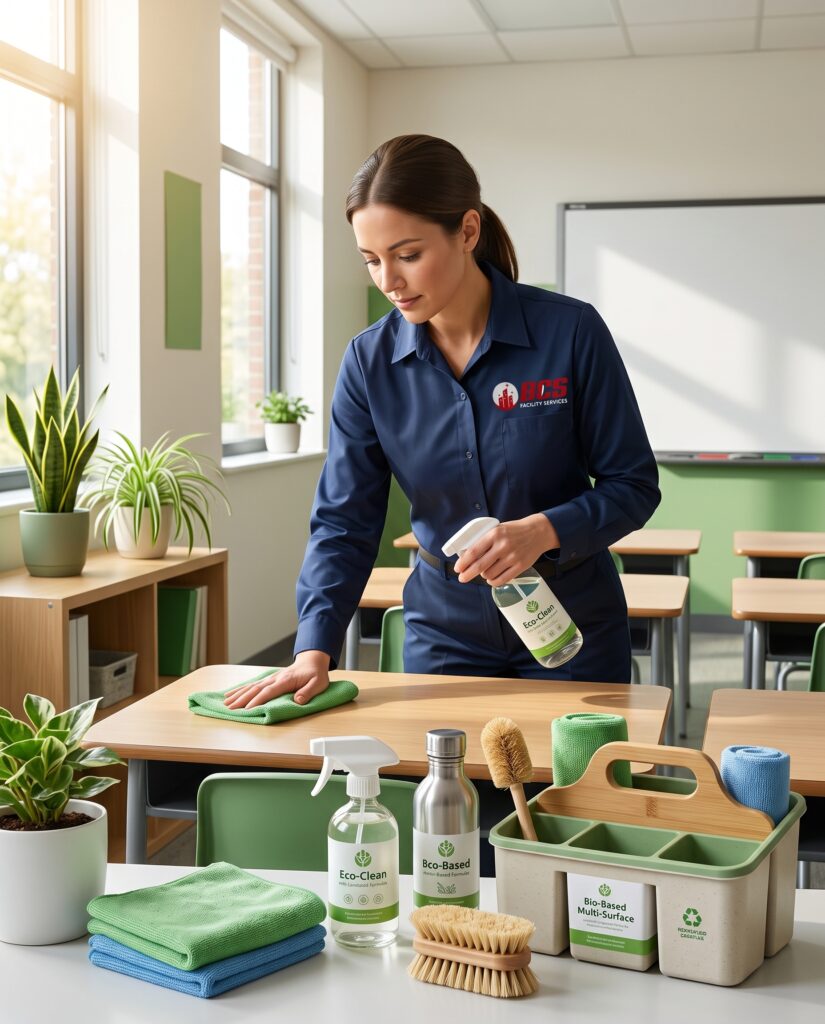
A school is cleaned every day, but the effects of those cleaning practices can last much longer. The products selected, the amount of waste generated, and the way cleaning tasks are performed can all influence the indoor environment, operational costs, and overall sustainability of a facility.
For facility managers responsible for schools in Hartford, green cleaning is not simply about choosing a product with an environmentally friendly label. It involves creating a cleaning system that considers students, staff, building conditions, cleaning personnel, and long-term facility operations.
Green Cleaning Starts With a Better System
A common misconception is that green cleaning means replacing every conventional product with a “green” alternative.
In practice, an effective program begins with the process.
Facility managers can review how frequently different areas are cleaned, which surfaces require specialized treatment, how chemicals are diluted, and whether cleaning equipment is being used efficiently. This approach can reduce unnecessary product use while maintaining appropriate sanitation standards.
At Burgos Cleaning, cleaning programs can be organized around the individual requirements of a school rather than relying on a one-size-fits-all routine.
Why Product Selection Matters in Schools
Schools have unique indoor environments. Students and employees spend substantial portions of their day inside classrooms, offices, corridors, cafeterias, and other shared spaces.
Cleaning products therefore deserve careful consideration.
Facility managers can ask contractors about:
-
Product ingredients and environmental certifications
-
Proper dilution procedures
-
Storage and labeling practices
-
Safety data and handling procedures
-
Appropriate products for different surfaces
-
Whether stronger chemicals are being used when they are unnecessary
The objective is not simply to select the product marketed as the “greenest.” It is to use suitable products correctly and only where they are needed.
Equipment Is Part of the Green Cleaning Equation
The equipment used by cleaning personnel can influence both productivity and resource consumption.
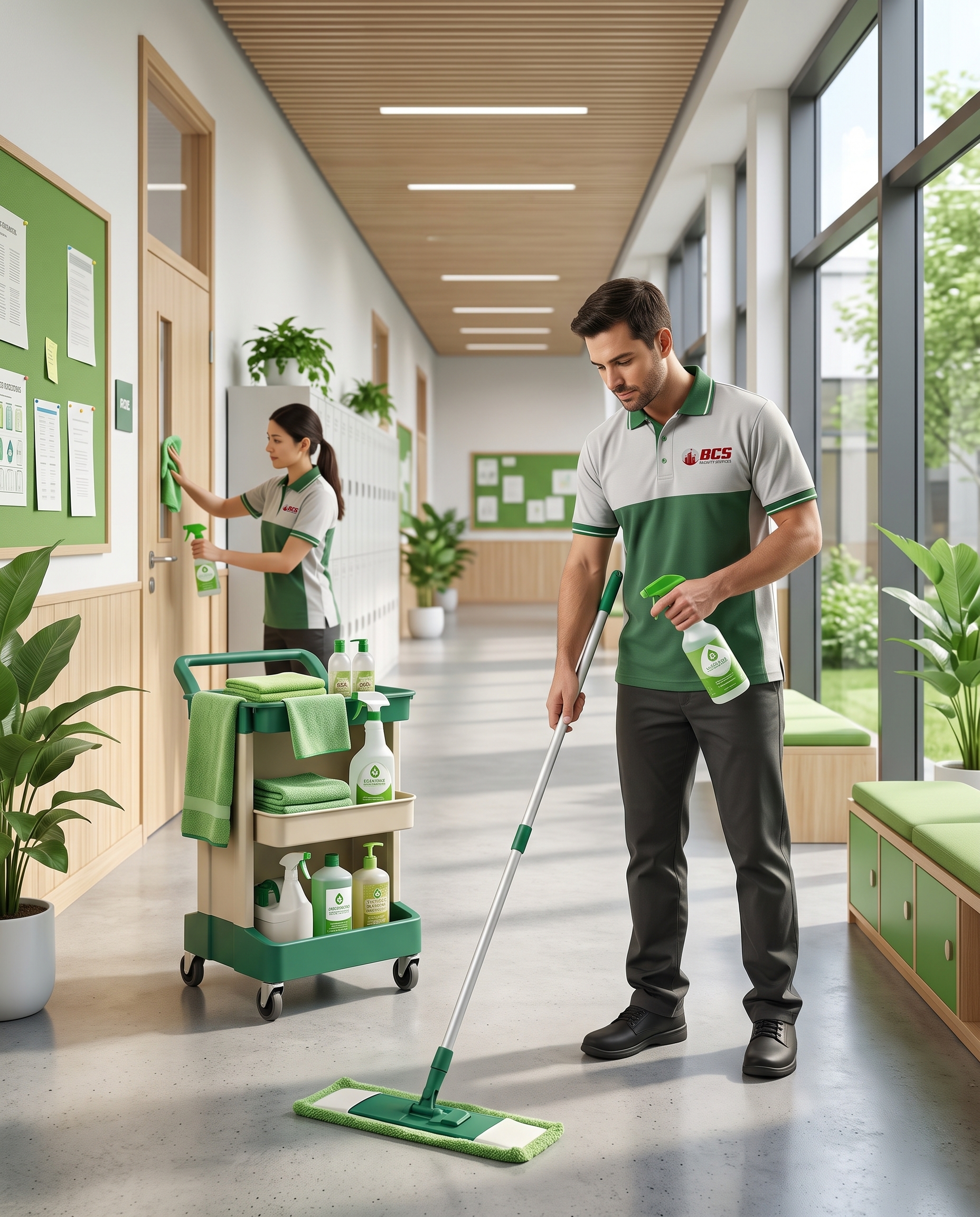
Microfiber systems, efficient floor equipment, properly maintained vacuums, and controlled dispensing systems may help reduce unnecessary water, chemicals, or disposable materials.
Equipment maintenance matters as well. A poorly maintained machine may require more time, produce inconsistent results, or consume additional resources.
For facility managers, reviewing equipment should therefore be part of evaluating a cleaning contractor—not an afterthought.
Waste Reduction Goes Beyond Recycling Bins
Green cleaning also involves examining what gets thrown away during routine operations.
Disposable wipes, liners, packaging, paper products, and other consumables can contribute to a school’s waste stream. A thoughtful cleaning program can identify opportunities to reduce unnecessary consumption without compromising hygiene.
That may involve selecting reusable materials where appropriate, purchasing supplies in efficient quantities, or establishing clear procedures for waste segregation.
Training Makes the Difference
Even well-selected products and equipment cannot deliver the intended results without properly trained personnel.
Cleaning staff should understand dilution ratios, product applications, equipment operation, storage procedures, and the appropriate cleaning method for each surface.
Training also helps prevent overuse. Using more chemical than necessary does not automatically produce a cleaner surface. In some situations, it can create additional residue and increase product consumption.
A contractor’s training process should therefore be one of the questions facility managers ask before entering into a service agreement.
Build Green Cleaning Into the Service Agreement
A school’s sustainability goals should not exist separately from its cleaning contract.
Facility managers can define expectations for product selection, equipment, consumable usage, waste handling, staff training, and reporting directly within the service agreement.
It is also useful to establish how performance will be evaluated. Regular inspections and communication between the school and cleaning provider can identify opportunities to improve the program over time.
A Practical Hartford School Cleaning Checklist
Before selecting a green cleaning contractor, facility managers can ask five straightforward questions:
What products will be used?
Request information about ingredients, certifications, and intended applications.
How are chemicals measured?
Controlled dilution helps prevent unnecessary product consumption.
How are employees trained?
Look for clear procedures rather than informal instruction alone.
What equipment is provided?
Ask how equipment contributes to efficient cleaning and resource management.
How will performance be monitored?
A sustainable program still needs measurable standards and regular oversight.
Green Cleaning Is an Operational Decision
For Hartford schools, green cleaning should be viewed as part of broader facility management rather than a marketing label. The strongest programs connect product selection, employee training, equipment, waste reduction, cleaning schedules, and accountability into one coordinated system.
Burgos Cleaning can work with facility managers to develop cleaning practices that address the practical demands of educational facilities while incorporating environmentally conscious methods.
When schools evaluate green cleaning this way, sustainability becomes part of the daily operation—not simply another item on a facilities checklist.