
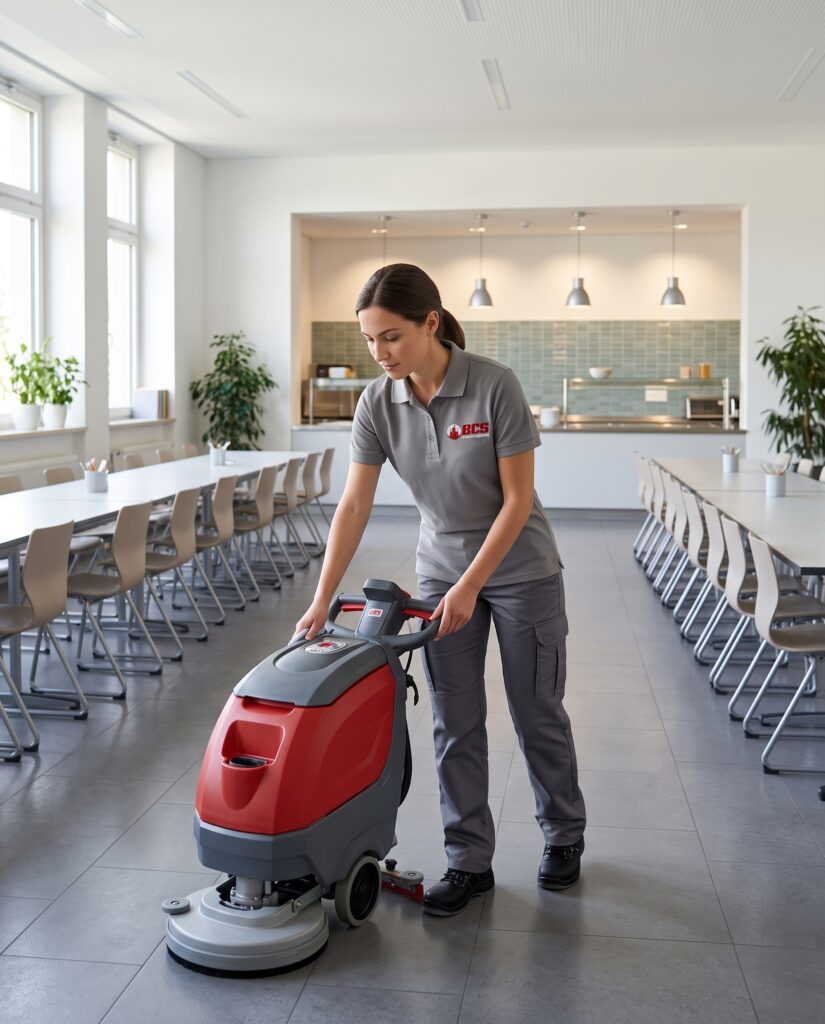
A cafeteria has a rhythm. Trays move across counters, students gather in waves, food travels from serving lines to tables, and within minutes, a clean room becomes busy. That is why cafeteria care works better as a timed routine than a single end-of-day task.
For Avon schools, a practical school cleaning checklist should divide the work into two moments: preparation before lunch and recovery after students leave. This approach helps staff address the right areas when they matter most.
Before Lunch: Set the Room Up for Service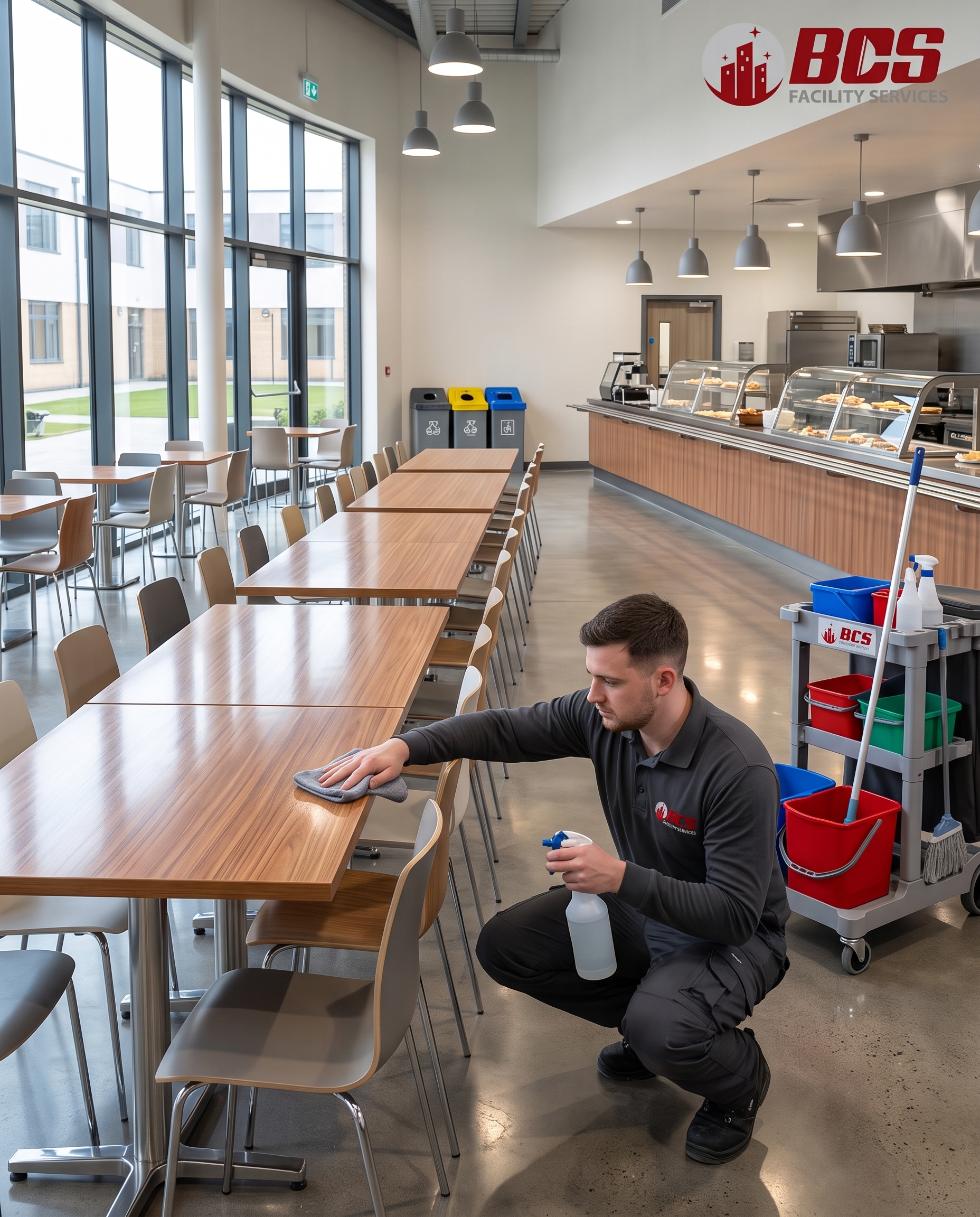
The first pass should make the cafeteria ready for another round of activity.
Start with the floor. Look for crumbs, paper, tracked-in dirt, and other debris left from the earlier school schedule. Spot cleaning high-traffic paths can reduce what gets carried into the dining area.
Next, inspect tables and seating. Wipe table surfaces, chair backs, and other frequently touched points according to the school’s established cleaning procedures. Pay attention to edges and undersides where food particles can collect.
Then check the serving area. Counters, handles, rails, and nearby surfaces should be free of visible residue. Waste containers should have fresh liners, and supplies such as paper products should be available before the lunch period begins.
The final pre-lunch check is about readiness. Floors should be unobstructed, cleaning equipment removed from student areas, and issues reported before the room fills.
After Lunch: Reset, Don’t Just Tidy
Once the last students leave, the checklist changes. The goal is to remove what lunch activity has introduced into the room and prepare the cafeteria for its next use.
Begin by collecting disposable items and separating waste according to the school’s procedures. Check beneath tables, around chair legs, beside serving stations, and along room edges. These less-visible areas often collect the small debris that a quick walk-through misses.
Move to tables and seating. Remove food particles and wipe surfaces using the products and contact times specified by the facility’s cleaning plan. Handles, push points, and other frequently touched surfaces deserve their own pass.
The floor comes next. Sweep or vacuum loose debris first, then use the appropriate floor-cleaning method for the surface. Spills should receive prompt attention rather than being left for the evening crew.
Do not overlook the perimeter. Check corners, baseboards, door areas, and spaces around equipment. A cafeteria can appear orderly from the center while still needing detailed attention around its edges.
Avon Example: Building the Checklist Around the School
Avon schools have different schedules, room layouts, and student traffic patterns, so a cafeteria routine should reflect how each facility operates. School cleaning in Avon can be more effective when cafeteria tasks are organized around lunch waves, serving areas, entrances, waste collection, and the time available between groups.
For example, Avon High School can use a cafeteria checklist that separates preparation tasks from post-lunch cleanup. This makes it easier for cleaning teams to identify which areas require attention before students arrive and which need a more detailed reset after lunch.
Burgos Cleaning takes a practical approach to school cleaning by considering how each facility is used. Instead of treating every building the same way, cleaning routines can be organized around traffic patterns, room functions, and daily schedules.
A Simple Two-Column Check
For a daily reference, divide the checklist into two columns.
Before lunch:
- Inspect floors and remove visible debris.
- Wipe tables and frequently touched surfaces.
- Check chairs and surrounding areas.
- Prepare waste containers.
- Inspect serving counters and nearby surfaces.
- Remove cleaning tools from student areas.
- Report spills, damage, or maintenance concerns.
After lunch:
- Collect waste and loose food debris.
- Clean tables, chairs, and touchpoints.
- Address spills and floor debris.
- Clean serving-area surfaces.
- Check corners, edges, and under tables.
- Service waste containers as needed.
- Complete the final room inspection.
Why Timing Matters
The strongest cafeteria routine is not always the longest one. It is the routine that places each task at the point when it has the most value. Pre-lunch cleaning prepares the room for use, while post-lunch cleaning deals with the effects of the busiest part of the school day.
For Burgos Cleaning, that practical approach is central to building dependable school cleaning programs. A well-planned cafeteria checklist can create clearer responsibilities, more consistent results, and a smoother transition between lunch periods.
When the checklist matches the way a school actually operates, cafeteria cleaning becomes a repeatable part of the school day rather than an afterthought.