
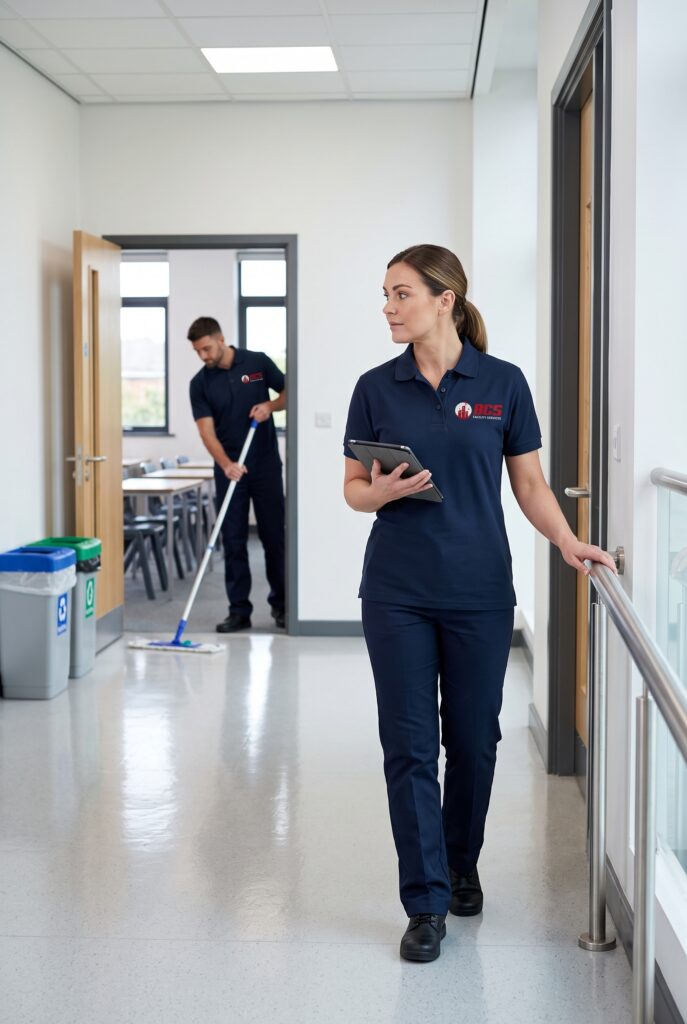
Educational facility maintenance works better when cleaning and upkeep are treated as an ongoing process rather than a task that ends when a room has been serviced. Schools contain classrooms, offices, cafeterias, restrooms, corridors, gyms, and shared spaces, each with different demands.
For East Hartford schools, a quality-control routine can create a practical way to check whether facility co nditions match established expectations.
Begin With the Standard
Quality control starts before anyone performs an inspection.
Facility managers can define what an acceptable room should look like after scheduled service. This might include clean floors, orderly waste containers, properly serviced restrooms, dust-free accessible surfaces, and appropriate attention to frequently used areas.
The standard should be specific enough that different people can evaluate the same space and reach a similar conclusion.
This gives educational facility maintenance a measurable starting point instead of relying only on general impressions.
Assign Checkpoints to the Building
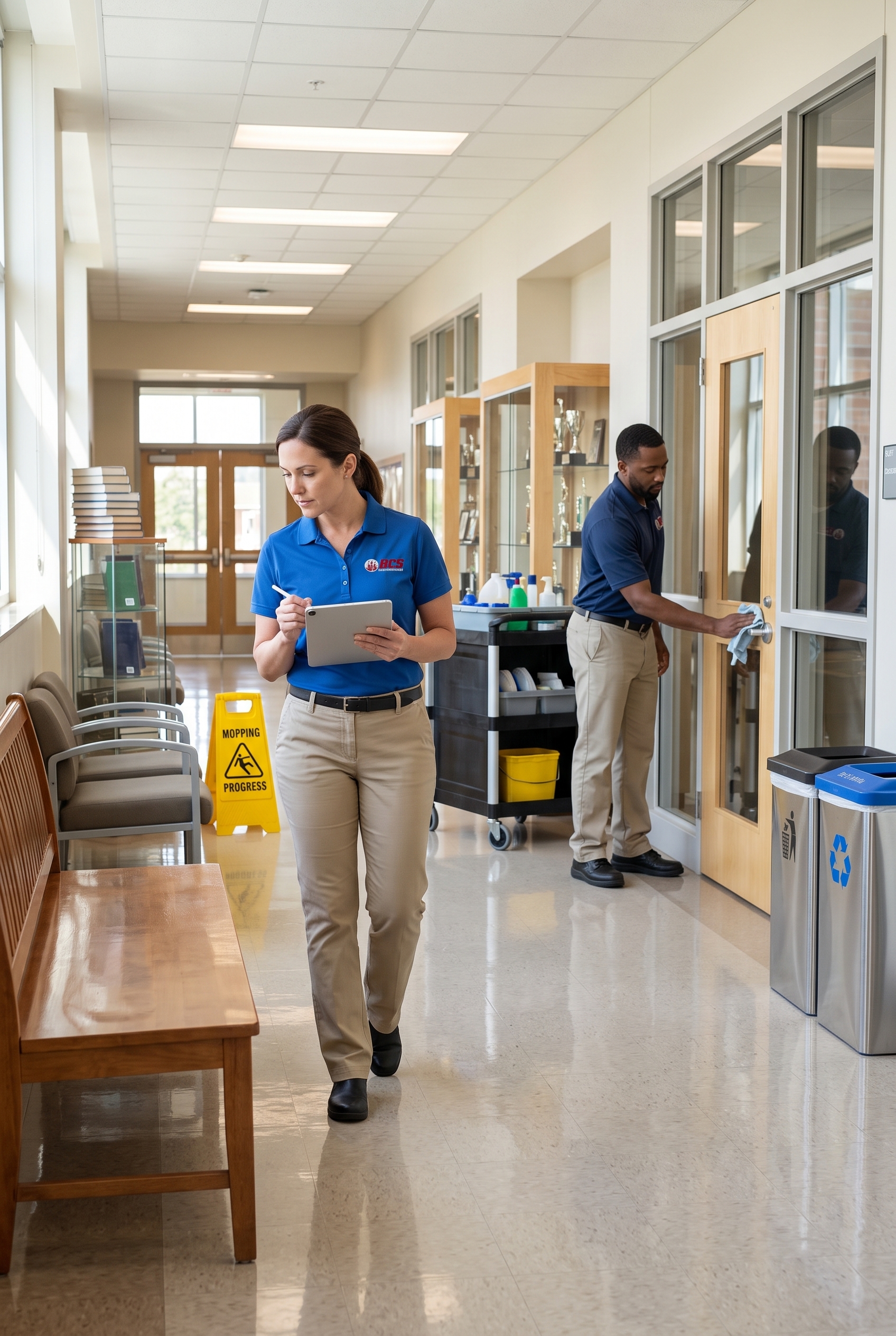
A large school does not need every area reviewed in exactly the same way.
Instead, facility teams can divide the building into checkpoints. One group may cover classrooms, another can address common areas, while restrooms, cafeterias, entrances, and activity spaces receive their own review points.
Each checkpoint can have a short list of conditions to verify.
This approach makes quality control easier to organize and helps prevent less-visible areas from being overlooked.
Verify Before Moving On
The next step is simple: inspect the completed work.
A supervisor or designated facility representative can review selected areas after cleaning has been completed. The purpose is not merely to search for mistakes. It is to confirm that the agreed service standard has been met.
For example, a classroom review might consider floors, waste removal, accessible surfaces, and the condition of frequently touched areas.
For facilities requiring school cleaning in East Hartford, this type of verification can also create clearer communication between school administrators and cleaning teams.
Document the Exceptions
A quality-control routine becomes more useful when problems are documented consistently.
Instead of writing “classroom needs more cleaning,” a record could identify the room, the specific condition, the date, and the action required.
This creates a useful trail.
If the same issue appears repeatedly, facility managers can investigate whether the cause relates to scheduling, traffic, equipment, staffing, or the cleaning method being used.
Documentation turns isolated observations into information that can guide future decisions.
Correct the Process, Not Just the Problem
A recurring issue may require more than another cleaning visit.
Suppose a particular hallway repeatedly develops debris shortly after routine service. The answer might involve adjusting the timing of service, changing the cleaning method, or considering how the area is being used.
This is where quality control becomes part of educational facility maintenance rather than a simple inspection exercise.
The objective is to identify why an issue happens and determine whether the existing process needs adjustment.
Review Patterns at the End of the Month
Individual inspection notes become more valuable when reviewed together.
At the end of each month, facility managers can look for repeated concerns, areas with fewer issues, response patterns, and tasks that frequently require follow-up.
A monthly review does not have to involve complicated statistics. A simple list of recurring observations can reveal where attention may be needed.
It also provides a useful opportunity to discuss whether the current cleaning routine still fits the school’s schedule and building activity.
Give the Cleaning Team a Feedback Loop
Quality control should involve communication in both directions.
Administrators can share recurring observations with the cleaning team, while cleaning personnel can point out conditions they encounter during routine work. A damaged surface, unusual spill pattern, or heavily used area may require attention beyond ordinary cleaning.
At Burgos Cleaning, this type of communication can help connect routine service with the practical conditions found inside an educational facility.
Build a Repeatable Cycle
A strong quality-control routine does not need to be complicated.
Set the standard. Assign checkpoints. Verify completed work. Document exceptions. Correct recurring problems. Review the results.
Then repeat the process.
For East Hartford schools, this cycle can make educational facility maintenance more organized and easier to evaluate throughout the school year. At Burgos Cleaning, the goal is to support cleaning routines that respond to actual facility conditions while giving school teams a clearer process for reviewing service quality over time.