
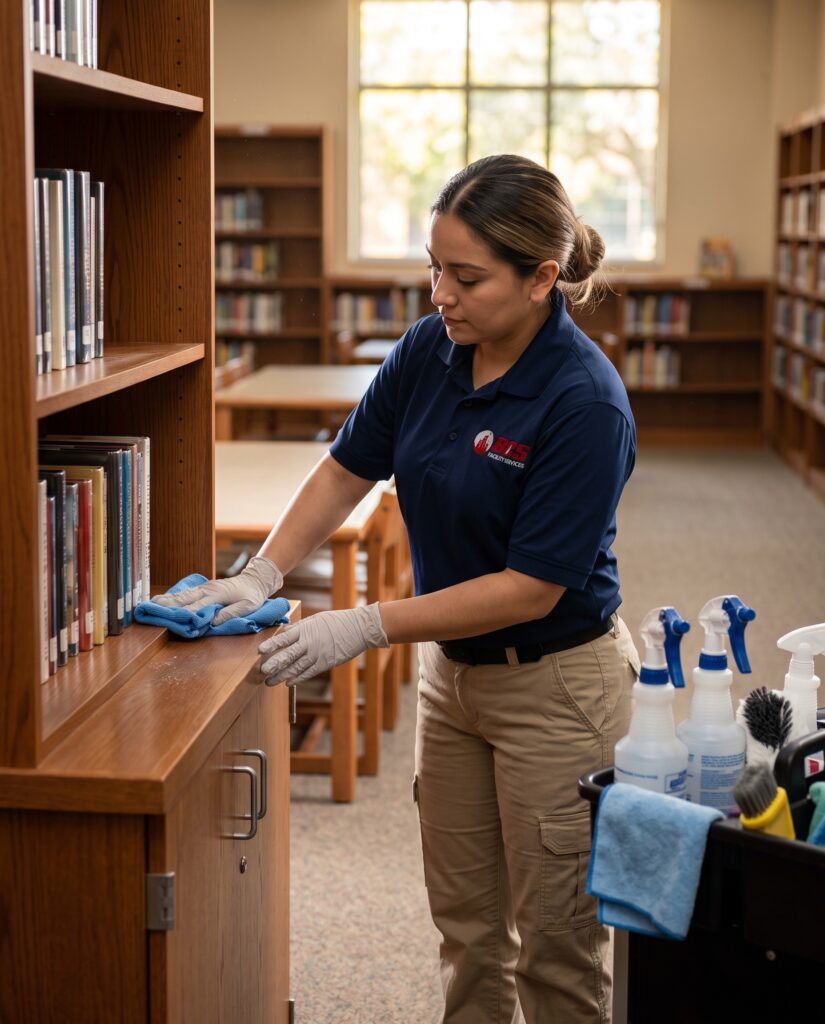
A school building has two sides to its cleanliness. There is the part students, teachers, and visitors notice every day, and there is the quieter layer that gradually collects dust, debris, and residue. Daily service addresses many visible needs, while deep cleaning gives facility teams an opportunity to reach the areas that normal routines cannot always cover.
At Burgos Cleaning, we look at deep cleaning as a way to address that second layer of the building. The objective is not simply to repeat everyday tasks. It is to identify where buildup develops and give those areas the attention they require.
Before the First Bell: What Remains?
The quietest time of day can reveal a lot about a building.
Before students arrive, facility teams can notice dust along floor edges, debris beneath furniture, residue near entrances, or buildup in corners that becomes difficult to identify once classrooms and hallways are occupied.
These observations can help identify areas that deserve periodic deep-cleaning attention.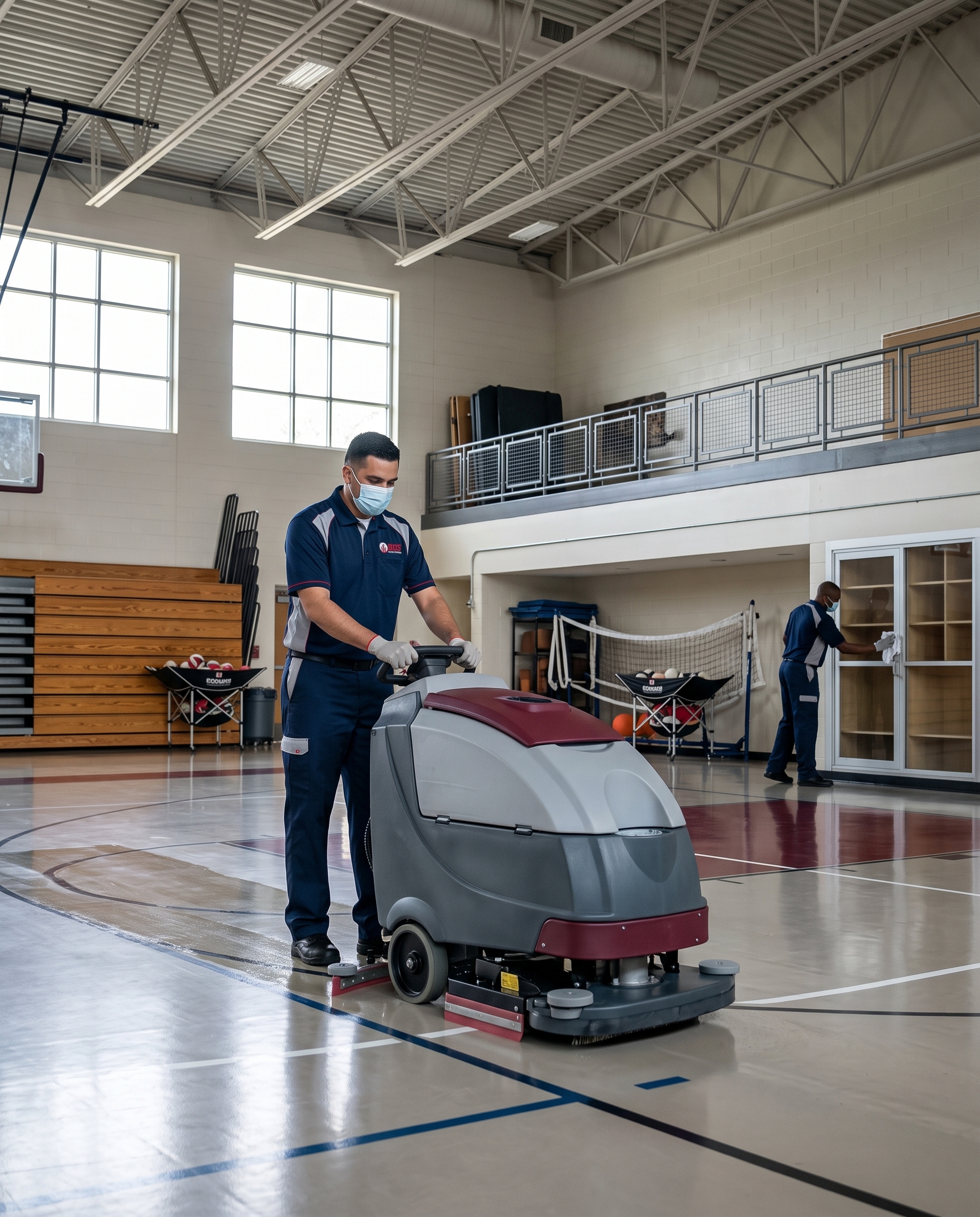
When Students Arrive: What Gets Covered?
Once the school day begins, furniture and equipment can make certain areas difficult to access.
Desks, chairs, cabinets, tables, and classroom materials can cover portions of floors and create narrow spaces that routine cleaning may not fully reach.
Deep cleaning provides a better opportunity to work around these obstacles. Where appropriate, movable furniture can be repositioned so cleaning teams can address areas that remain hidden during normal service.
Burgos Cleaning considers accessibility when planning detailed cleaning rather than assuming every surface can receive the same attention every day.
Between Classes: Where Does Debris Travel?
Student movement can transport small amounts of debris from one part of the building to another.
Particles can move from entrances into hallways, classrooms, stairways, and shared spaces. Over time, some of that material can settle along floor transitions, wall edges, and other areas that are less noticeable.
This is why deep cleaning should consider how the building connects together instead of treating every room as completely separate.
During Lunch: What Changes?
Lunch periods introduce another type of activity.
Food particles, packaging, waste, and increased movement can affect areas beyond the cafeteria. Nearby hallways, entrances, seating spaces, and flooring may also require attention depending on how students move through the building.
For school cleaning in New Britain, facility teams can use these activity patterns when deciding which areas require additional service during scheduled deep-cleaning periods.
After Activities: What Does the Building Reveal?
Once classrooms and shared spaces have been heavily used, overlooked conditions can become easier to identify.
Dust may collect around furniture. Equipment may have been moved. Storage areas may have become crowded. Floor edges and door frames may show buildup that is difficult to address during a quick daily pass.
This is where detailed cleaning can complement routine service.
Burgos Cleaning approaches these situations by looking beyond the center of a room. Edges, transitions, furniture gaps, storage spaces, and less-accessible surfaces can all contribute to the overall condition of a school.
After the Final Bell: Where Deep Cleaning Fits
The end of the school day provides greater access to many parts of the building.
With students and staff gone, cleaning teams can work on tasks that require additional time or space. Depending on the facility’s plan, this may include detailed floor care, accessible high-surface cleaning, furniture movement, baseboard attention, door components, and storage areas.
These tasks do not necessarily need to happen every day. Their frequency can depend on room use, surface conditions, and the school’s overall maintenance plan.
Ask What Has Been Ignored
One useful question for facility teams is:
Which areas have not received detailed attention recently?
This question can reveal gaps that a standard daily checklist may not identify.
A school may have spotless classroom floors while the tops of cabinets have accumulated dust. A hallway may receive regular sweeping while its baseboards receive less frequent attention. A storage room may be organized while the accessible surfaces behind stored materials receive little service.
Deep cleaning works best when these gaps are identified intentionally.
Create a Rotation, Not a Bigger Daily Checklist
Not every overlooked surface requires daily cleaning.
Some areas may need frequent attention because they accumulate debris quickly. Others can be scheduled periodically, while difficult-to-access locations may require occasional specialized service.
Burgos Cleaning uses this distinction to help make detailed facility care more practical. A deep-cleaning plan should complement daily service instead of turning every routine visit into an oversized checklist.
Clean Beyond What People Notice
A school building should not only receive attention where students and visitors naturally look.
The areas beneath furniture, along edges, above normal eye level, inside storage spaces, and around building fixtures can all influence the facility’s overall condition.
For New Britain schools, a thoughtful school building deep cleaning program can bring those less-visible areas back into the cleaning cycle. When daily service and periodic detailed work support each other, the building receives attention from more than one perspective—and that is what creates a more complete approach to school facility care.