

There is a small window of opportunity between finishing an accessory dwelling unit and filling it with the things that make it feel like home. The rooms are empty, the cabinetry is new, and the fixtures have barely been used. Yet the property can still carry traces of construction.
That makes an ADU different from an established home that simply needs routine housekeeping. Dust from installation, particles from finishing work, fingerprints, packaging residue, and marks from construction activity may remain even after the contractors have left.
For homeowners planning post-construction cleaning in Wethersfield, the most useful approach may be to consider how the unit will function on its first day rather than simply working through a conventional cleaning checklist.
The Morning After Construction Ends
Imagine walking into the ADU after the final contractor has packed away the tools.
The first impression may reveal more than expected. Fine particles can collect on horizontal surfaces, while newly installed features may have marks from handling and installation. Some areas may look finished but still require detailed attention.
This is the point where cleaning changes the character of the property. The objective is not to undo construction activity, but to remove its remaining traces before everyday use begins.
Heavy construction waste or hazardous materials may fall outside a standard cleaning service, so those responsibilities should be established separately.
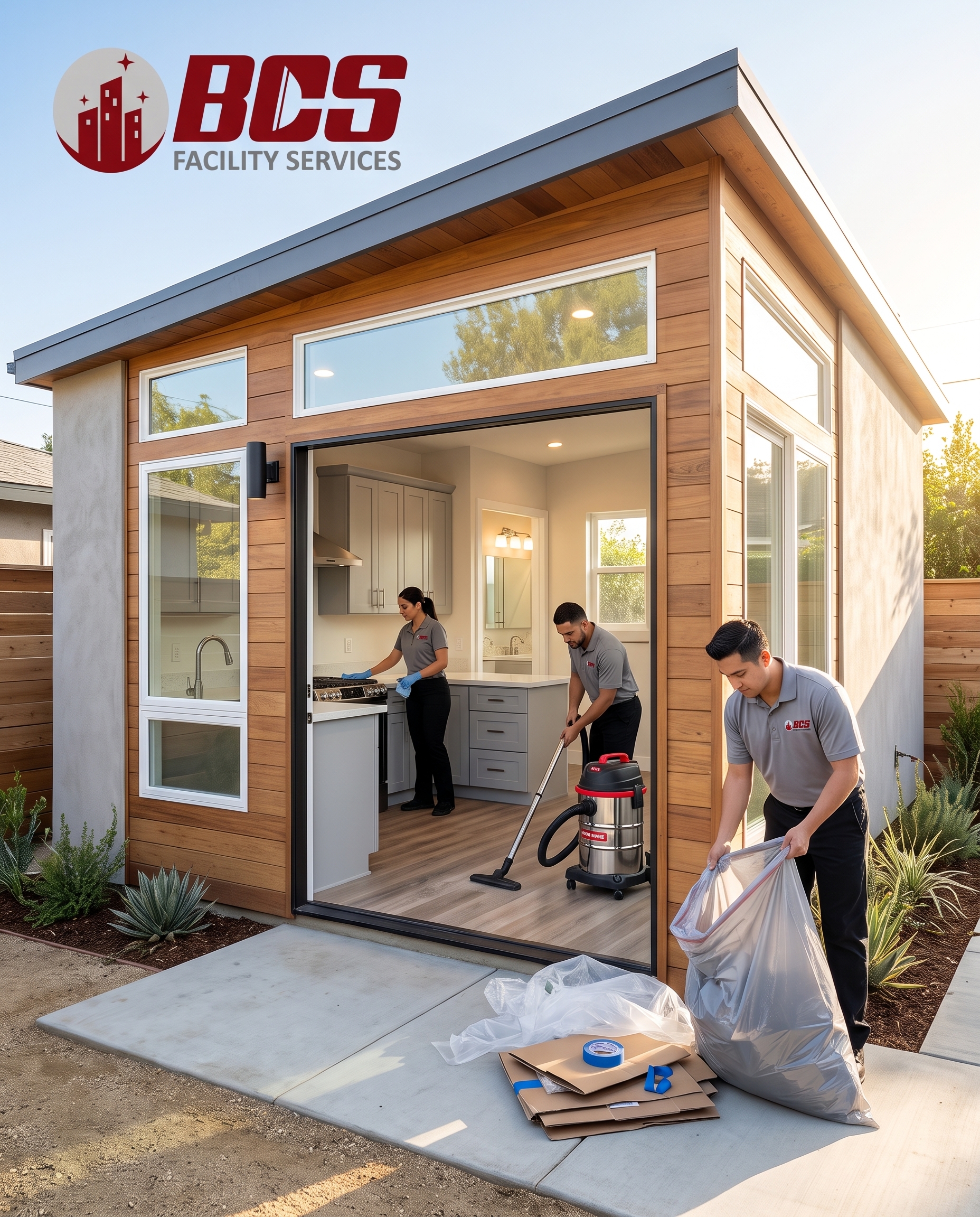
The Doorway Test
The entrance is a useful place to begin thinking about the finished condition of an ADU.
Construction traffic may have moved through the doorway dozens of times. Materials, tools, footwear, and packaging can introduce particles to the threshold and surrounding surfaces.
Doors, handles, trim, nearby flooring, and other accessible features can therefore be evaluated from the perspective of someone entering the unit for the first time.
A clean entrance creates a natural psychological boundary: outside is the property where construction happened; inside is the space intended for living.
The Empty-Cabinet Moment
An empty ADU provides an opportunity that disappears quickly.
Cabinet shelves, drawers, closets, and built-in storage can be examined before they receive dishes, clothing, linens, appliances, or household supplies. Fine particles that accumulated during installation can be addressed while every compartment remains accessible.
Counters and other preparation surfaces can receive similar attention.
This is particularly valuable in a compact ADU, where storage may be designed to perform several jobs at once.
The First Trip Across the Floor
Flooring has a different meaning after construction ends. During the build, it is a surface that workers need to cross. Afterward, it becomes part of the occupant’s daily environment.
Construction particles may collect around thresholds, transitions, edges, and other accessible areas. The appropriate cleaning method depends on the flooring material, since hardwood, tile, vinyl, laminate, and carpet do not necessarily respond to identical products or techniques.
Cleaning before furniture arrives also provides much better access to the floor as a whole.
The Places That Catch Daylight
Natural light can reveal details that artificial lighting sometimes hides.
Windows, mirrors, glass doors, glossy countertops, and other reflective surfaces can make fine particles and fingerprints particularly noticeable. A final cleaning can therefore consider not only whether these surfaces have been wiped, but how they appear when daylight moves across them.
Frames, sills, accessible tracks, and surrounding areas may also warrant attention depending on the agreed scope.
The result is less about creating an artificial shine and more about removing distractions from newly completed features.
The First-Use Test
Before the ADU is furnished, imagine its first ordinary day.
Someone opens a cabinet. They turn a faucet. They walk from the entrance to the kitchen. They place something on a counter. They use the bathroom. They open a closet.
Those simple actions provide a practical way to identify areas that deserve final attention. Door hardware, switches, fixtures, storage spaces, counters, floors, and other frequently accessed features can be considered according to how the occupant will interact with them.
Scheduling Around the Last Trade
The timing of cleaning can be just as important as the cleaning itself.
If drilling, painting, sanding, fixture installation, or other finishing activities continue after detailed cleaning, new residue can appear. Coordinating the final service after disruptive work is substantially complete can reduce unnecessary repeat cleaning.
Burgos Cleaning is one local provider that offers construction-cleaning services and serves the Wethersfield area. Property owners comparing providers should confirm the precise scope of work, scheduling requirements, surface treatments, and debris-removal responsibilities before booking.
When an ADU Finally Feels Occupied
An accessory dwelling unit does not become useful simply because construction has ended. It becomes useful when the space is ready for the people, possessions, and routines that will occupy it.
That is why post-construction cleaning in Wethersfield can be viewed as a transition rather than a final chore. Cleaning the accessible surfaces, storage areas, floors, fixtures, glass, and other details gives the newly built unit a chance to move beyond its construction phase.
The most meaningful finish is reached when the occupant can walk through the door and think about what the ADU is for—not what was recently built there.