
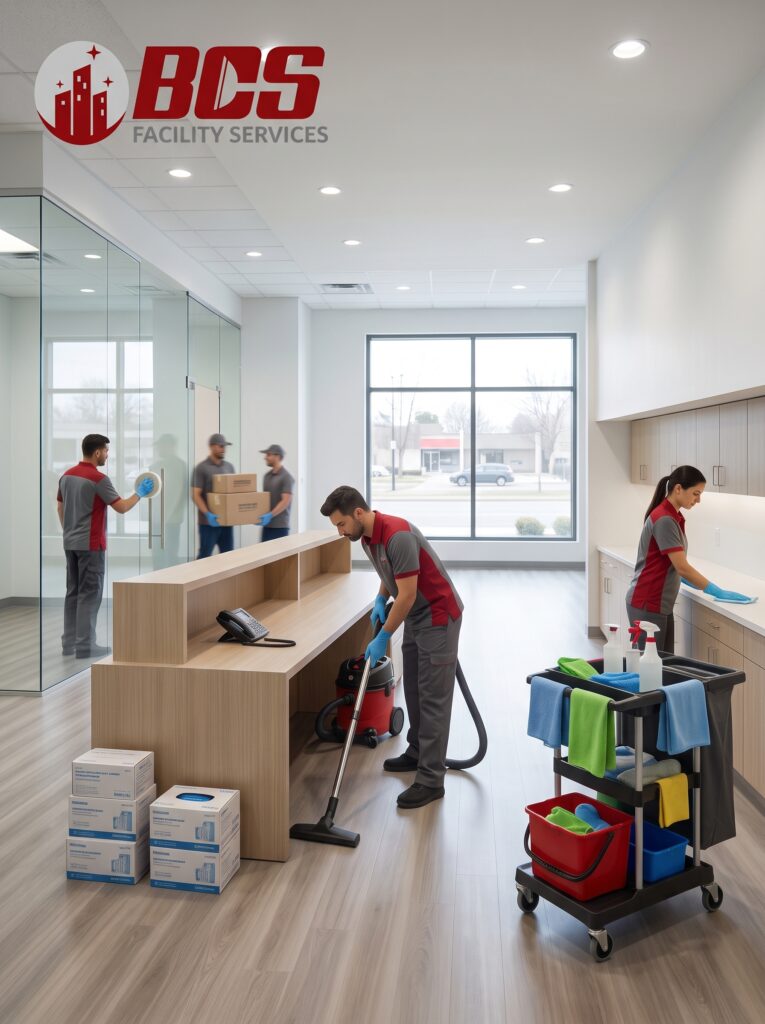
A commercial build-out changes the identity of a property. An empty suite becomes an office, an unfinished storefront becomes a retail environment, or a basic interior is transformed into a space designed around a company’s daily activities.
But there is an unusual period after the construction ends: the business has a finished property, yet the property has not started functioning as a business.
That gap is where Bristol cleanup services after commercial build-outs can have a practical role. Rather than treating cleanup as the final item on a contractor’s checklist, businesses can approach it as part of the transition into normal operations.
1. The Handoff: When Construction Gives Way to Operations
During a build-out, the space is organized around workers and materials. Afterward, it needs to accommodate employees, customers, equipment, inventory, and business routines.
The first cleanup stage can help mark that change.
Loose packaging, removable construction material, accumulated particles, and other project-related remnants may need to be addressed before the business begins setting up. The exact scope varies according to the project, and heavy waste or specialized materials may require separate disposal arrangements.
This is less about making an empty building attractive and more about establishing a workable starting point.
2. The Setup Window: Clean Before the Space Fills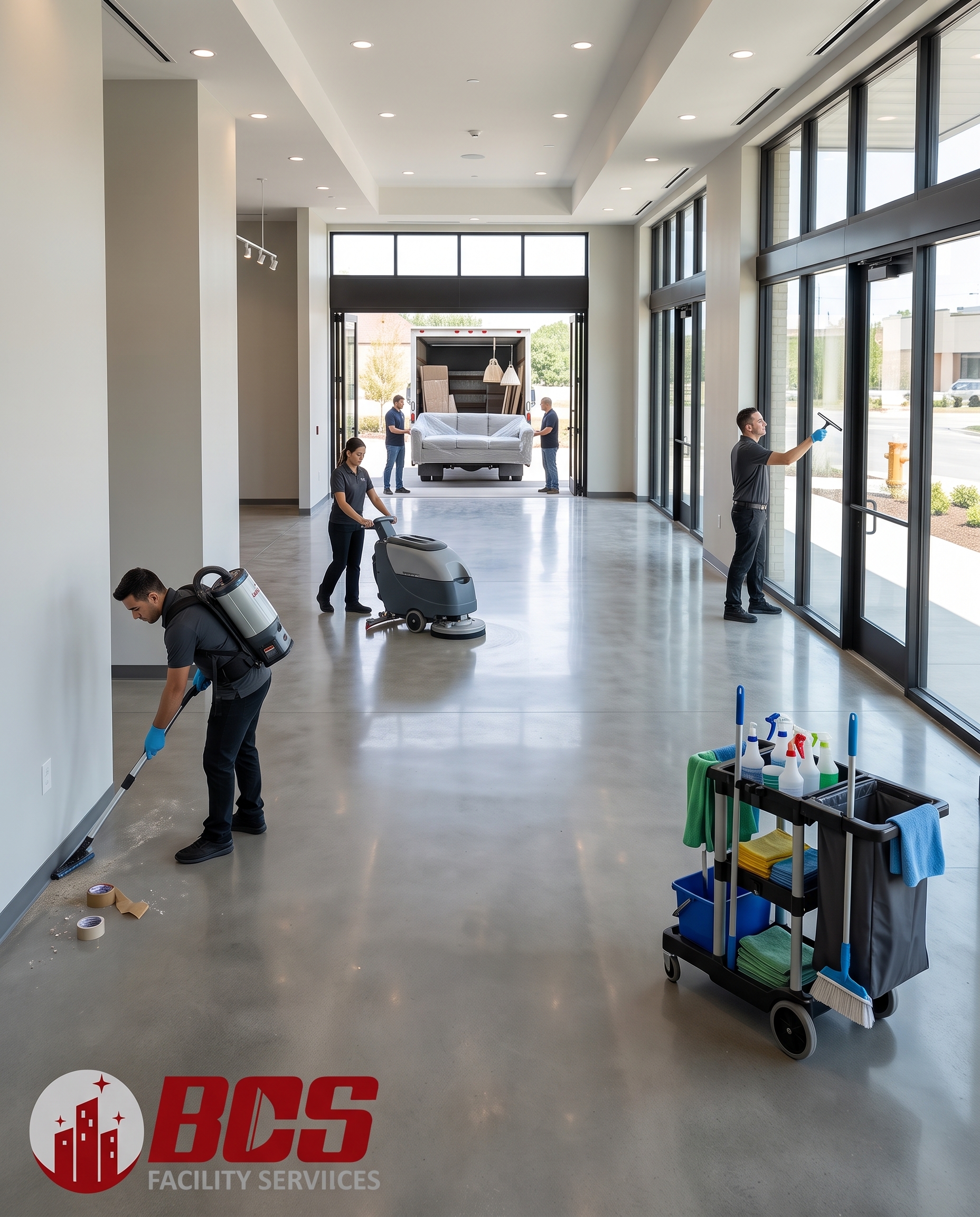
There is considerable value in cleaning while a commercial property is still relatively empty.
New counters can be accessed before equipment is placed on them. Cabinets and drawers can be addressed before supplies arrive. Open flooring is easier to reach before workstations, displays, furniture, and machinery occupy the space.
This setup window can also reveal construction-related marks around newly installed features.
The principle is simple: access tends to decrease as the business moves closer to opening.
3. The New-Surface Reality
A commercial build-out can introduce materials that have never experienced ordinary business activity.
Glass partitions may still carry fingerprints from installation. New flooring may have collected particles from construction traffic. Cabinetry, counters, doors, hardware, and fixtures may have been handled repeatedly while different trades completed their work.
Each material may require an appropriate cleaning approach. Carpet, tile, vinyl, wood, glass, metal, and other finishes should not automatically receive identical treatment.
The goal is to address removable construction residue while respecting the condition and care requirements of the newly installed surfaces.
4. The Business Inventory Test
Once merchandise, office supplies, kitchen equipment, files, or other business materials begin arriving, the character of the space changes again.
Storage becomes occupied. Counters become workstations. Display shelving receives products. Employees begin arranging their personal work areas.
A useful cleanup plan can anticipate this transition.
For example, accessible shelving and cabinet interiors may be easier to address before inventory arrives. Open work surfaces can be prepared before equipment is positioned. This approach makes the cleaning relevant to how the business will actually use the property.
5. The Customer’s First Five Minutes
Customers do not inspect a newly renovated property like a construction manager.
They experience it naturally.
They walk through the entrance, approach a counter, look at displays, sit in a waiting area, use a restroom, or move through a reception space. During those ordinary interactions, fingerprints, floor residue, dusty edges, or marks on glass can become noticeable.
For customer-facing businesses, the cleanup should therefore consider the visitor’s path through the property.
A retail store may prioritize display areas and entrances. An office may emphasize reception and meeting spaces. A restaurant may have different priorities around dining and service areas.
6. The Employee’s First Morning
The employee experience provides another useful perspective.
Staff members may open cabinets, use break areas, operate equipment, move between workstations, and access shared facilities. Areas that receive little attention from a customer’s viewpoint can become important immediately to employees.
This makes the final cleanup more than an appearance exercise. It is also about preparing the practical areas that support the working day.
7. Timing the Cleanup Around the Opening
Cleaning too early can create unnecessary repetition.
If electricians, installers, painters, sign crews, or other contractors still need access to the property, their work may introduce new particles or marks. A business should coordinate detailed cleaning with the project’s actual completion schedule rather than relying solely on an opening-date countdown.
For businesses in Bristol, scheduling post-construction cleaning in Bristol after major construction activities have ended can help align the cleanup with the property’s transition toward normal operations.
8. Comparing Cleanup Providers
Businesses can ask prospective providers how they approach commercial build-outs rather than assuming every construction-cleaning package is identical.
Questions can address interior glass, flooring, cabinets, fixtures, construction residue, debris responsibilities, scheduling, and final touch-ups.
Burgos Cleaning is one Connecticut provider that offers construction cleaning services and serves Bristol. When comparing providers, businesses should obtain a clearly defined scope so everyone understands what will be handled before opening.
When the Property Becomes a Workplace
The real endpoint of a commercial build-out is not the moment the last tool leaves.
It is the moment the property can support the business that was designed for it.
That means the entrance can receive visitors, employees can settle into their work areas, inventory can be stored, equipment can operate, and customers can experience the newly completed environment without construction remnants competing for attention.
For businesses arranging Bristol cleanup services after commercial build-outs, viewing cleanup as part of that operational transition creates a more useful perspective. The building has already been constructed. The final cleaning prepares it for what comes next: business.