
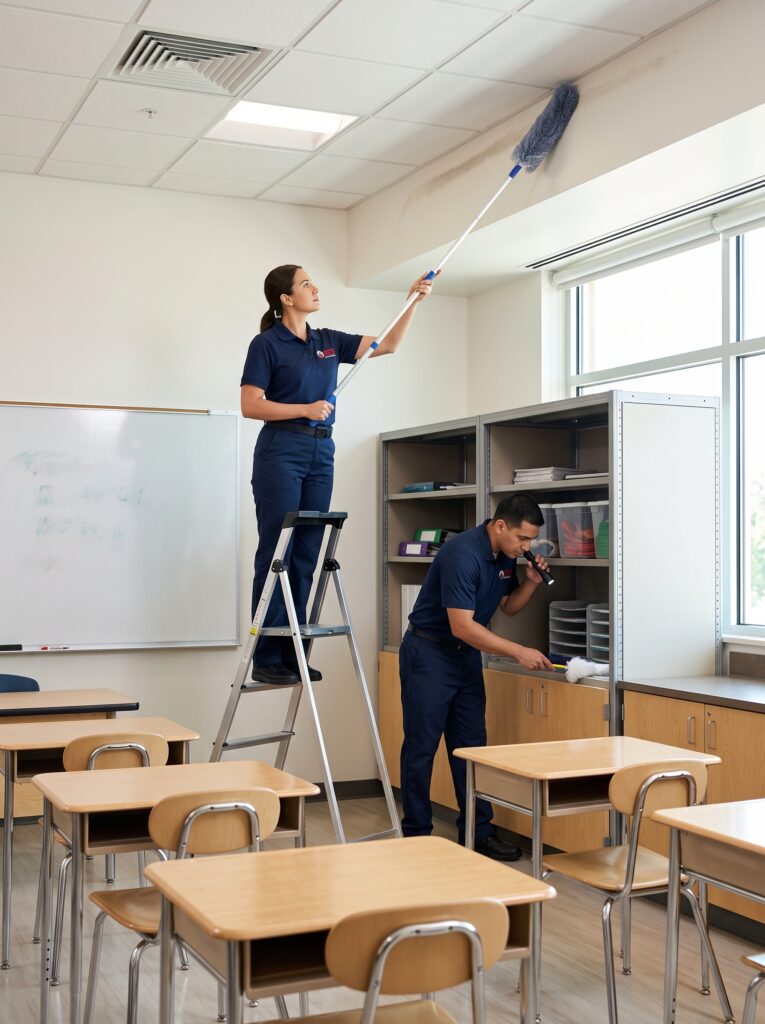
A school can appear spotless from floor level while dust, debris, and residue gradually collect above eye level, behind fixtures, or inside narrow spaces. These locations are easy to overlook because routine cleaning naturally focuses on surfaces that staff and students interact with most often. Managing hard-to-reach areas requires a different approach based on accessibility, surface type, and cleaning frequency.
Begin With a Different View
Start by looking upward and behind furniture rather than following the usual cleaning route. Upper door frames, cabinet tops, shelving, light fixture surrounds, vent covers, and spaces beneath fixed counters can all become overlooked collection points.
Creating a simple list of hard-to-reach areas gives facility teams a clearer picture of locations that need periodic attention. Each space can be categorized according to its height, accessibility, surface material, and likelihood of collecting debris.
Choose Access Before Equipment
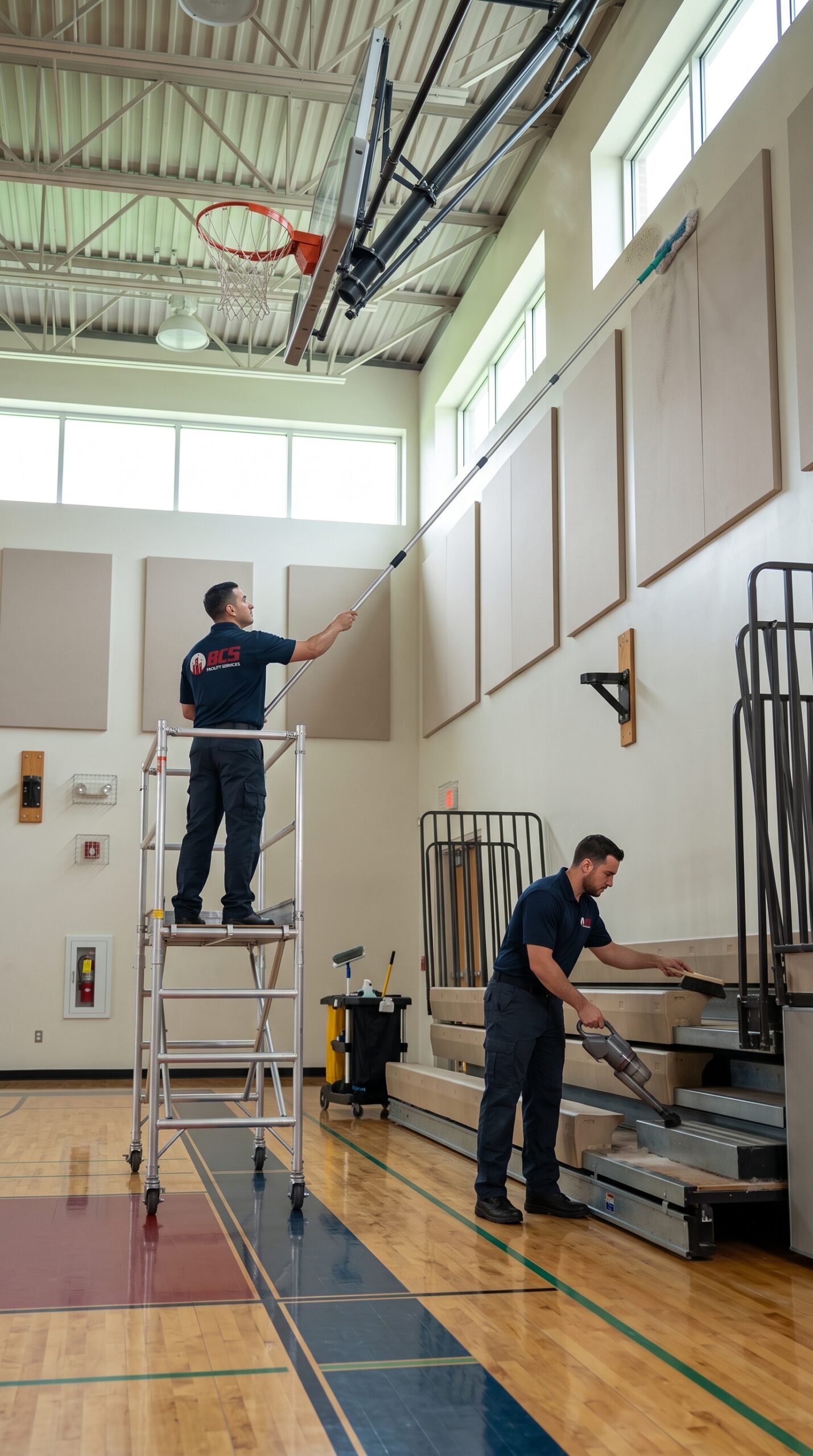
The safest cleaning method begins with determining how the surface can actually be reached. Chairs and desks should not become makeshift platforms simply because a location is inconvenient.
Depending on the facility, approved ladders, extension tools, microfiber dusters, or specialized cleaning equipment may provide safer access to elevated hard-to-reach areas.
The material also influences the cleaning method. Painted surfaces, acoustic panels, shelving, grilles, and fixtures may require different levels of moisture or pressure. Evaluating the surface first can reduce unnecessary damage.
Turn Periodic Work Into a Rotation
Not every location needs attention every day. A rotating schedule can give less-visible spaces regular service without adding every task to the daily checklist.
For example:
Week One: upper ledges and door frames
Week Two: cabinet tops and shelving
Week Three: accessible grilles and vent covers
Week Four: spaces behind movable fixtures
The schedule can then be adjusted according to building conditions. For school cleaning in Tolland, this type of rotation can also be planned around school breaks, classroom schedules, and periods of lower occupancy.
Check What Furniture Hides
Furniture placement can create narrow hard-to-reach areas where dust and small debris collect. Cabinets, storage units, desks, and equipment may leave gaps that are difficult to access during normal service.
When furniture can safely be moved, cleaners can address the space behind or underneath it. Locations that cannot be moved can be documented for periodic or specialty service.
This makes concealed spaces part of the facility plan rather than something addressed only when buildup becomes obvious.
Give Elevated Surfaces Their Own Attention
Upper surfaces are another category that can easily fall outside ordinary routines. Cabinet tops, ledges, door frames, and areas around air outlets may gradually collect material.
When servicing these hard-to-reach areas, cleaning from higher surfaces toward lower ones can help prevent particles from settling on surfaces that have already been cleaned.
Teams can also record locations that accumulate material quickly. If one ledge repeatedly develops buildup while another remains relatively clean, their service frequencies do not necessarily need to be identical.
Know When Cleaning Becomes Maintenance
Some hard-to-reach areas are close to mechanical, electrical, or ventilation components. These locations require extra judgment.
A removable grille may be suitable for routine surface cleaning, while internal mechanical components may require qualified maintenance personnel. Separating cleaning responsibilities from equipment maintenance helps prevent an ordinary cleaning task from becoming a system-related problem.
Track the Details
A straightforward record can make periodic service easier to organize. Note the location, surface type, service date, access limitation, and any recurring buildup.
Over several cleaning cycles, these records can show which hard-to-reach areas need more frequent attention and which can remain on a longer rotation.
At Burgos Cleaning, we approach educational facility care with attention to both visible spaces and hard-to-reach areas that can easily be overlooked. A structured routine helps Tolland schools incorporate these locations into regular facility care instead of treating them as occasional afterthoughts.