
A school rarely stays the same from morning to afternoon.
Students arrive with outdoor dirt on their shoes. Classrooms fill with activity. Lunch creates a different type of cleanup. Afternoon programs bring people into shared spaces, while evening activities can extend building use long after the final class ends.
That constant movement makes school cleanliness an ongoing process. For Canton schools, the challenge is not simply getting the building cleaned. It is creating a routine that responds to how the property is actually used throughout the year.
The First Hour: What Happens Before Classes Begin?
Before students enter the building, entrances have already started collecting whatever the day brings from outside.
Rain, mud, leaves, dust, and debris can quickly travel beyond the doorway. A strong morning routine can focus attention on entryways, floors, mats, door handles, and nearby surfaces before student traffic increases.
This early attention can make the rest of the school day easier to manage.
Instead of waiting for visible buildup, cleaning teams can address areas that are likely to become busy first.
Between Classes: The Building Changes Quickly
A quiet hallway can become crowded within minutes.
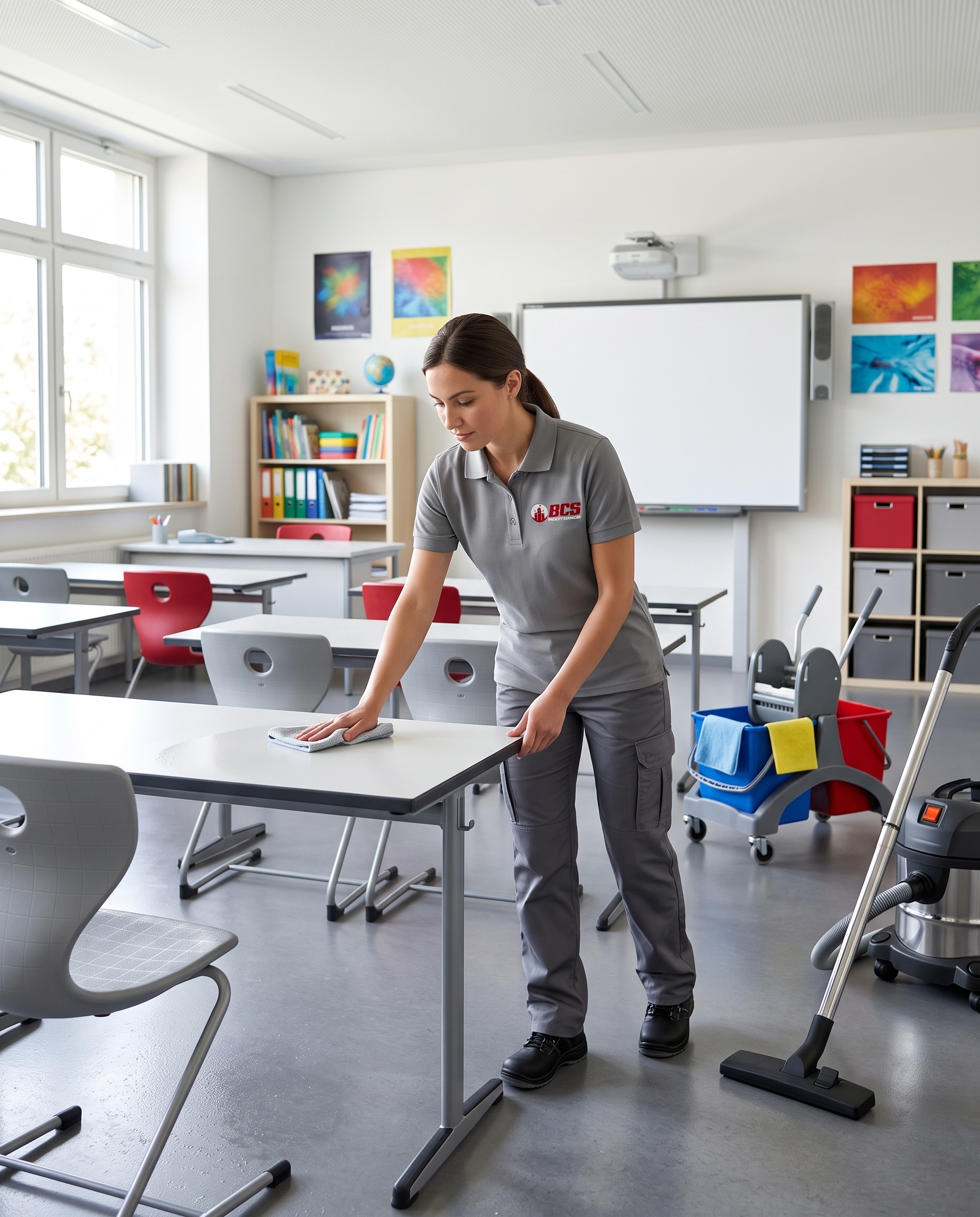
Students move between classrooms, teachers carry supplies, and staff travel between different areas of the building. These short periods can create repeated contact with doors, railings, desks, and other shared surfaces.
The important consideration is frequency.
Areas touched or crossed by hundreds of people may require more regular attention than spaces with limited use. A school cleaning plan can therefore assign different frequencies to different parts of the property.
Lunch Creates a Different Cleaning Challenge
The cafeteria follows its own rhythm.
Before lunch, tables may be prepared for students. During lunch, food and drinks move throughout the area. Afterward, crumbs, spills, packaging, and tracked debris may require prompt attention.
Rather than treating cafeteria cleaning as another item on a general checklist, schools can build specific before-and-after-lunch tasks into the daily routine.
Tables, floors, waste containers, serving areas, and high-contact surfaces can be addressed according to the timing of student use.
What About Classrooms That Look Clean?
Appearance does not always tell the entire story.
A classroom may look orderly while dust collects along edges, waste accumulates in hidden areas, or frequently handled surfaces receive repeated contact throughout the day.
That is why routine cleaning should include both visible and less noticeable areas.
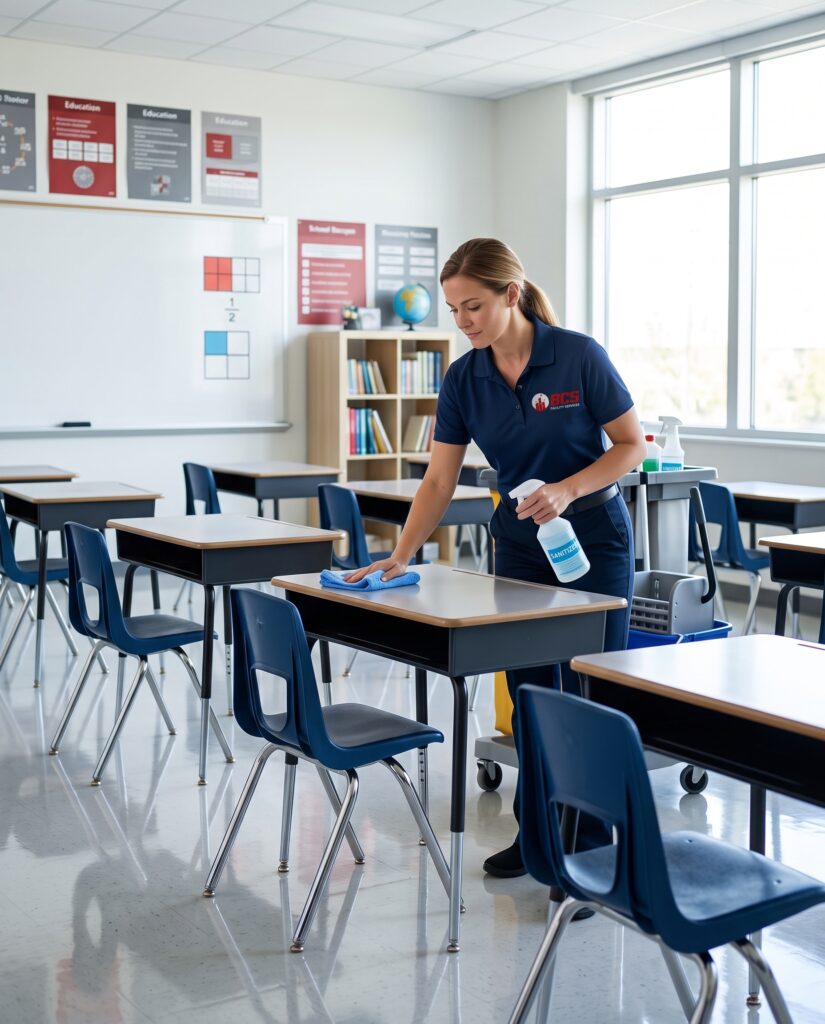
Desks, chairs, shelves, floors, door hardware, and other commonly used surfaces can be incorporated into recurring service plans. The exact frequency can vary depending on classroom size, occupancy, and daily activities.
When the Weather Changes, the Routine Should Too
Canton schools experience different cleaning demands as conditions change throughout the year.
Wet weather can increase moisture around entrances. Warmer months may bring more outdoor activity. Spring can introduce additional dust and pollen indoors, while winter conditions can increase the amount of residue carried inside.
The answer is not necessarily adding the same tasks every season.
Instead, cleaning priorities can shift according to what the building is experiencing at that particular time.
The Quietest Weeks Can Be the Most Useful
School breaks provide something that normal school days do not: space.
With fewer students and staff inside, cleaning teams have more flexibility to work on detailed maintenance. Carpets, floors, interior glass, fixtures, corners, and other areas that are difficult to address during busy periods can receive more attention.
For this reason, a year-round plan should include both regular cleaning and periodic work scheduled around academic breaks.
A Canton School Does Not Need a One-Size-Fits-All Routine
A small elementary school, a larger campus, and a facility with athletic or community programs can have completely different cleaning requirements.
The right routine starts by looking at the property itself.
How many people use the building? Which spaces experience the most traffic? When are cafeterias occupied? Are there evening activities? Which areas require frequent attention? Which maintenance tasks can wait for weekends or school breaks?
These questions help shape a more practical cleaning schedule.
Burgos Cleaning can build cleaning routines around the individual needs of a facility rather than forcing every school into the same service pattern.
A Simple Way to Think About Year-Round Cleanliness
Instead of asking whether a school was cleaned today, consider four questions:
What was used the most?
What became dirty the fastest?
What needs attention before tomorrow?
What can be scheduled for a quieter period?
These questions can help facility teams identify where cleaning resources should go next.
For schools looking for school cleaning in Canton, this type of flexible approach can provide a practical foundation for managing classrooms, corridors, cafeterias, restrooms, and shared spaces throughout the academic year.
Cleanliness Should Move With the School
A school is a living, changing environment. Its cleaning needs change with the students, seasons, schedules, activities, and weather.
That is why effective school maintenance should not depend on one rigid routine.
Burgos Cleaning approaches school cleaning with attention to daily activity, facility requirements, and scheduled maintenance needs. By matching cleaning work to the way a school operates, facilities can create a more consistent environment for students, teachers, staff, and visitors throughout the year.