

A construction project has a defined work zone, but the effects of construction do not always stop at the edge of that area.
Workers travel through hallways. Materials pass through entrances. Equipment moves between rooms. Doors open and close throughout the day. Fine particles can travel with people, air movement, and everyday activity.
As a result, areas that were never part of the renovation can still carry traces of the project.
For property managers and contractors in West Hartford, understanding this construction spillover can make the final cleanup process more thorough without turning the entire property into a construction zone.
The Boundary Is Only a Starting Point
Temporary walls, doors, plastic barriers, and signs help separate active construction from occupied areas. However, these boundaries mainly control access rather than completely stopping construction-related material from moving.
A worker may leave an active area and walk through a finished corridor. A box of materials may be transported through an entrance. Equipment may be stored temporarily in another part of the building.
Each movement creates another opportunity for dust, debris, packaging material, or dirt to reach surrounding spaces.
This is why the area immediately outside the work zone deserves attention during the project’s closing stage.
Follow the Routes, Not Just the Rooms
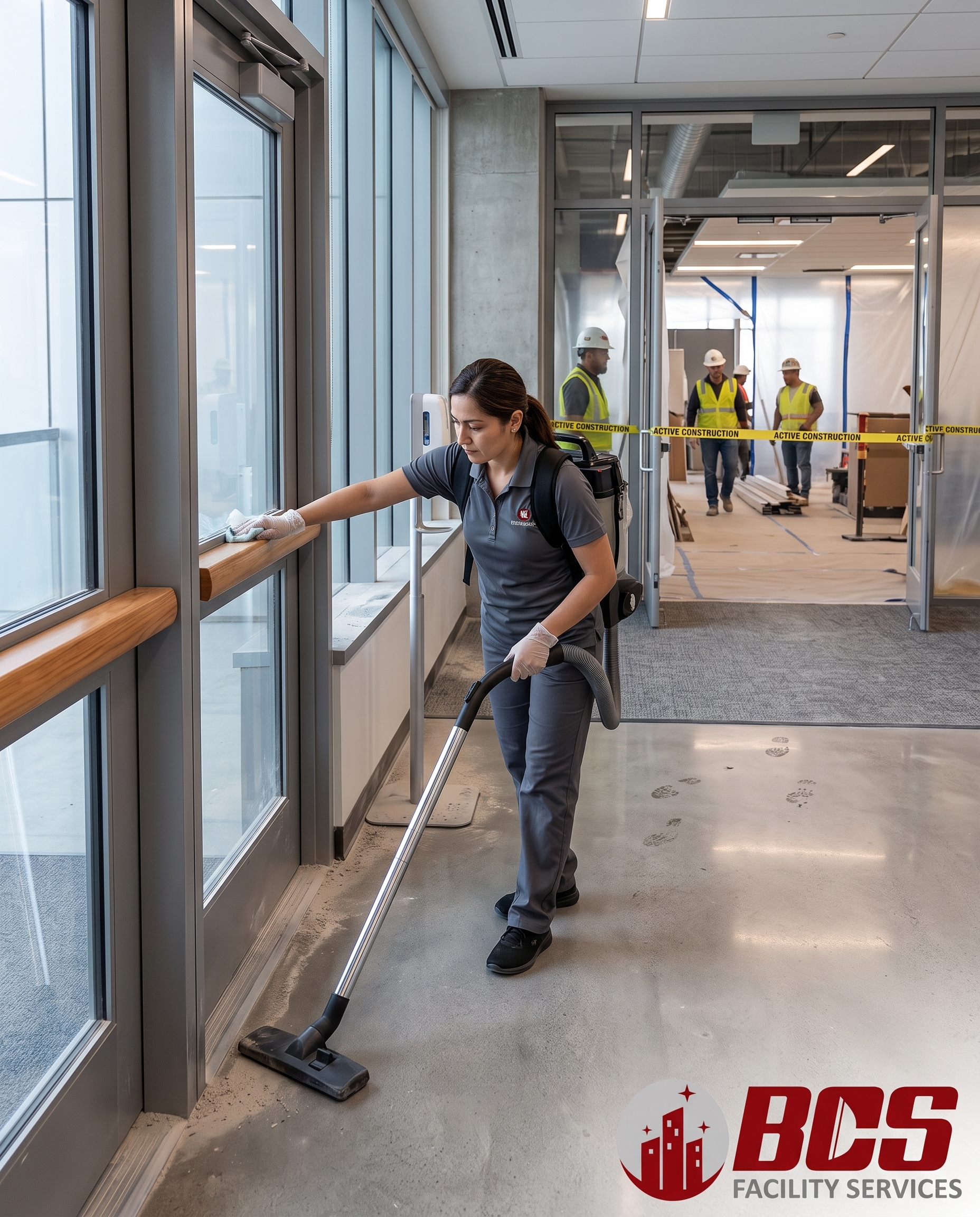
One of the easiest ways to understand construction spillover is to follow the paths used during the project.
Consider the main entrance workers used. Then trace the hallways leading toward the renovation area. Look at stairways, elevators, loading points, storage locations, and other shared routes.
These paths can experience repeated traffic even though no construction work occurs directly on them.
Flooring may collect particles from shoes and equipment. Corners can accumulate small pieces of debris. Door thresholds can collect material carried from one side of a building to another.
The route itself becomes evidence of how the project moved through the property.
Temporary Storage Creates Permanent Cleaning Needs
Construction projects often require temporary staging areas.
Boxes, tools, fixtures, equipment, protective materials, and other supplies may be placed outside the main work zone because they need to remain accessible.
When those materials are eventually removed, the surface underneath can reveal what accumulated during storage.
Dust may have settled around the edges. Packaging fragments may have fallen nearby. Repeated movement of supplies can leave marks on flooring or walls.
For this reason, temporary storage locations should be part of the final project review even if they were never included in the original renovation footprint.
Air Movement Can Carry Fine Particles
Not every construction-related particle moves because someone physically carried it.
Air movement can also influence where fine dust settles. Ventilation systems, fans, open doors, and normal circulation can move lightweight particles toward adjacent areas.
The result can vary from one property to another depending on its layout and ventilation system.
An office corridor near an active work area may therefore receive more construction dust than a closed room farther away. Ledges, horizontal surfaces, vents, and other accessible areas can warrant inspection when the project approaches completion.
Shared Spaces Often Reveal the Spillover
Common areas can tell an important part of the construction story.
An entrance may experience repeated worker traffic. An elevator may transport materials throughout the project. A shared hallway may connect the work zone with storage areas.
None of these spaces may have been renovated, yet they may have experienced more activity than usual.
Instead of asking only, “What rooms were under construction?” a final review can ask:
“Which areas were connected to the construction process?”
That small change in perspective can produce a more accurate cleaning scope.
When the Work Is Finished
Once major construction activity ends, the cleaning assessment can move beyond the original work zone.
For post-construction cleaning in West Hartford, surrounding pathways, entrances, staging areas, and shared spaces can be considered alongside the primary construction area.
The exact cleaning requirements depend on the property and the work performed. Burgos Cleaning provides construction cleaning in West Hartford and can address construction-related dust, debris, floors, windows, glass, adhesive residue, and final detailing as part of its construction-cleaning services.
This makes the final cleaning scope more closely connected to the actual activity that took place rather than relying on the size of the original work zone alone.
Think Beyond the Construction Line
A building project changes patterns of movement temporarily.
People enter through different doors. Materials occupy unexpected spaces. Equipment travels through shared areas. Temporary storage changes how rooms and hallways are used.
Those changes can leave traces after the construction crew has moved on.
Recognizing construction spillover does not mean every part of a West Hartford property requires intensive cleaning. Instead, it means identifying the areas that were actually influenced by the project’s activity.
Once those surrounding spaces are addressed along with the primary work zone, the property can make a cleaner transition from active construction site to finished environment.
The construction may have happened in one section of the building, but its footprint can tell a much wider story.