
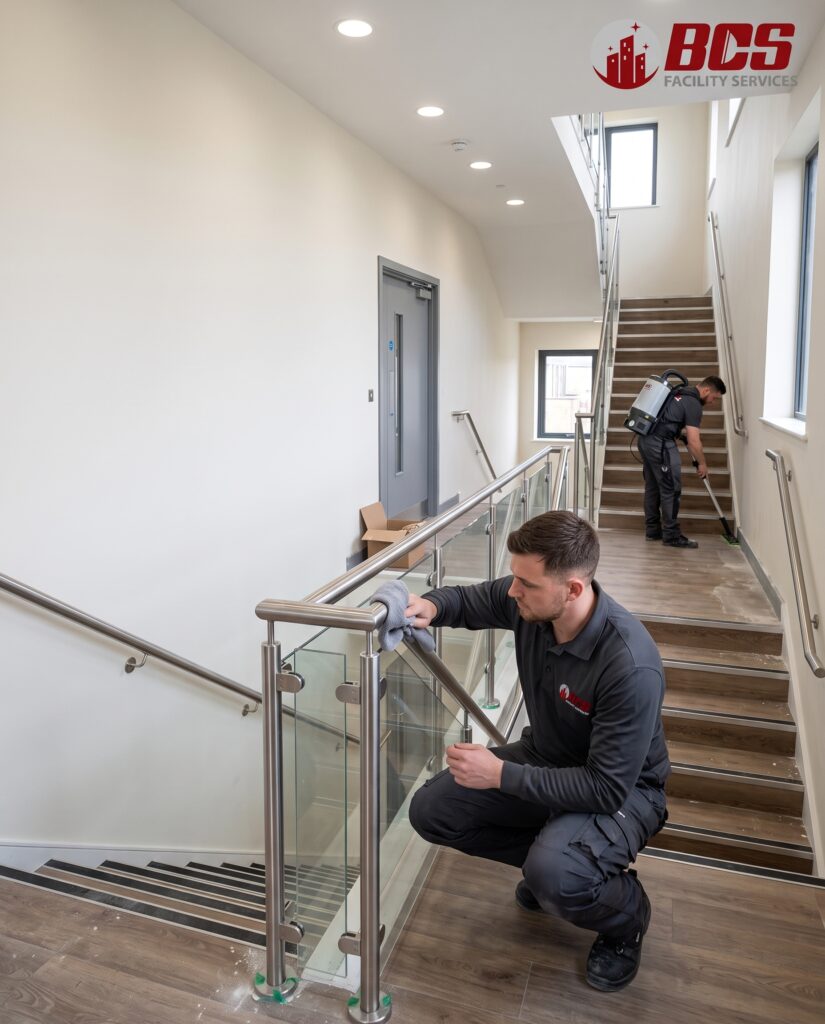
A remodeling project can reach its official finish before a property is actually ready for normal use.
The contractors have completed their work. Materials have been installed. Tools have been removed. The property may look finished at first glance.
Then the closer inspection begins.
At Burgos Cleaning, we often look at this stage differently from ordinary cleaning. After remodeling, the question is not simply whether a space is dirty. The better question is whether anything from the construction process is still interfering with the finished property.
Here are five questions that help explain what professional cleanup covers.
1. What Did the Remodeling Leave Behind?
Construction does not produce only large pieces of waste.
There can also be fine dust, packaging fragments, adhesive residue, fingerprints, labels, installation marks, and small particles left around newly completed areas.
Some remnants are easy to identify. Others blend into the surrounding surface until light hits them from a different angle.
Professional remodeling cleanup addresses these details so the property no longer carries obvious evidence of the work.
The exact cleaning requirements depend on the type of renovation and the materials involved.
2. Where Did the Construction Activity Travel?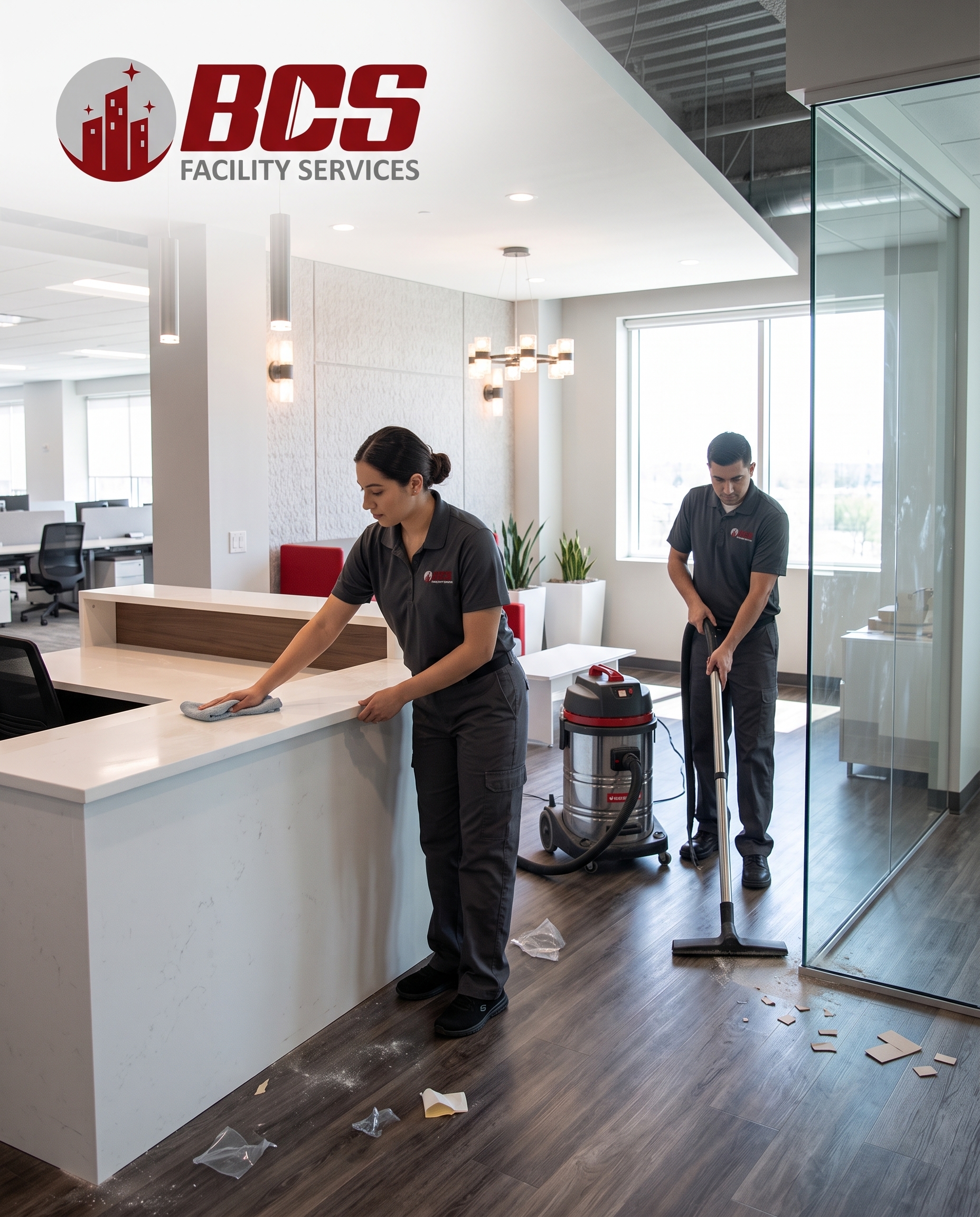
The remodeled area is not necessarily the only area affected.
Workers need access routes. Materials need to enter and leave. Equipment moves between locations. Waste has to be transported outside.
As a result, construction-related dust and debris can travel through hallways, entrances, adjoining spaces, and shared areas.
This is particularly important for commercial properties where only part of a building may have been renovated.
At Burgos Cleaning, we consider the movement surrounding the project rather than limiting attention to the exact area where construction took place.
3. Which Surfaces Need More Than Routine Cleaning?
A regular cleaning routine and post-remodel cleanup are not necessarily the same thing.
Routine cleaning may address everyday dust, fingerprints, waste, and general surface buildup.
A remodeling project can introduce a different range of conditions.
New flooring may require careful treatment. Fresh cabinetry may contain installation dust. Glass may have adhesive or handling marks. Fixtures may have fingerprints around their edges.
Professional cleanup takes the condition and material of each surface into account instead of assuming that one cleaning method works everywhere.
4. What Does the Property Look Like Under Better Lighting?
A property can appear clean under general lighting and reveal additional details when viewed closely.
Natural sunlight may highlight dust on flooring.
Reflections can reveal marks on glass.
Overhead lighting can make residue around fixtures easier to notice.
This is why a final inspection matters.
At Burgos Cleaning, we view the post-remodel stage as an opportunity to look beyond the first impression. The objective is to identify the small details that can affect how a newly renovated property presents itself once employees, customers, tenants, or other occupants return.
5. What Needs to Happen Before People Move Back In?
The answer depends on the property.
An office may need its work areas prepared for employees. A retail space may need customer-facing areas addressed. A renovated commercial property may need shared spaces cleaned before tenants return.
For post-construction cleaning in Plainville, there is no single universal scope that applies to every project.
The size of the renovation, materials used, amount of construction activity, and condition of the property can all influence the work involved.
Professional cleaning is therefore less about following a fixed routine and more about responding to what the remodeling actually left behind.
A Remodel Changes the Cleaning Conversation
Once construction ends, the property enters a transition.
It is no longer an active work site, but it may not yet feel completely finished either.
That gap is where professional cleanup has a purpose.
At Burgos Cleaning, our role is to address the construction-related traces that remain after the work itself has finished, helping the property move from renovation activity toward regular use.
The result should not be a space that merely looks recently cleaned.
It should feel like the remodeling is genuinely over.
The Final Check Is About More Than Appearance
Before a remodeled property returns to everyday activity, consider the details that are easiest to overlook.
Are construction remnants still present?
Have access routes received attention?
Do newly installed surfaces require specialized care?
Are windows and glass free from handling marks?
Does fine dust remain around edges, fixtures, or elevated surfaces?
If the answers point to unfinished cleaning, the property may need another stage before normal occupancy.
For Plainville property owners and managers, remodeling cleanup provides that final bridge between completing the construction and using the newly renovated space.
The contractors may have finished the remodel.
The cleaning stage helps make the finished property ready for what comes next.