
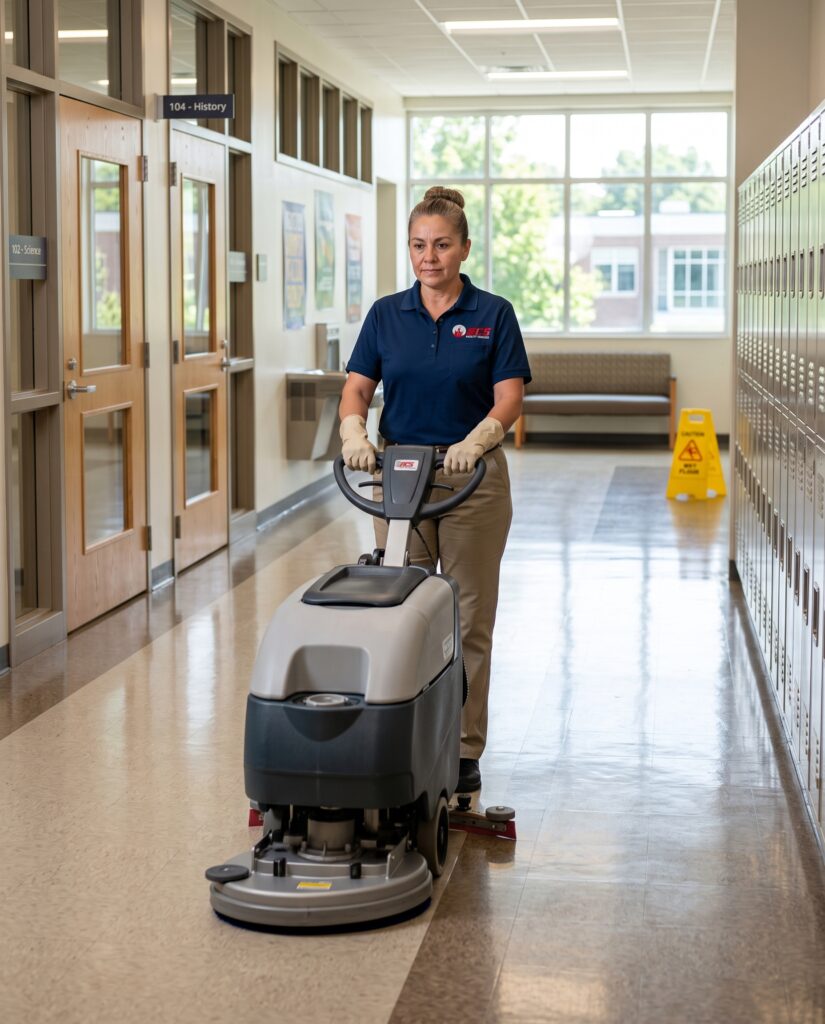
A school cleaning inspection should answer one simple question:
Is the building being cleaned the way the school expects it to be cleaned?
That sounds straightforward, but a useful inspection requires more than walking through a hallway and looking for obvious dirt. Facility teams need to check the details, compare conditions with agreed standards, and identify patterns that may require a change in the cleaning routine.
Think of the inspection as a building health check for cleanliness.
For teams responsible for school cleaning in Newington, here is a practical way to structure that check.
The 10-Minute “Visitor Test”
Before looking at individual cleaning tasks, enter the building as a visitor would.
Pause at the entrance.
What do you notice first?
Look at the floors, glass, doors, reception area, visible waste, and general appearance. If the entrance immediately looks neglected, there may be a problem with cleaning frequency or traffic management.
This first impression does not replace a detailed inspection. It simply tells you where to look more closely.
Follow the Footsteps
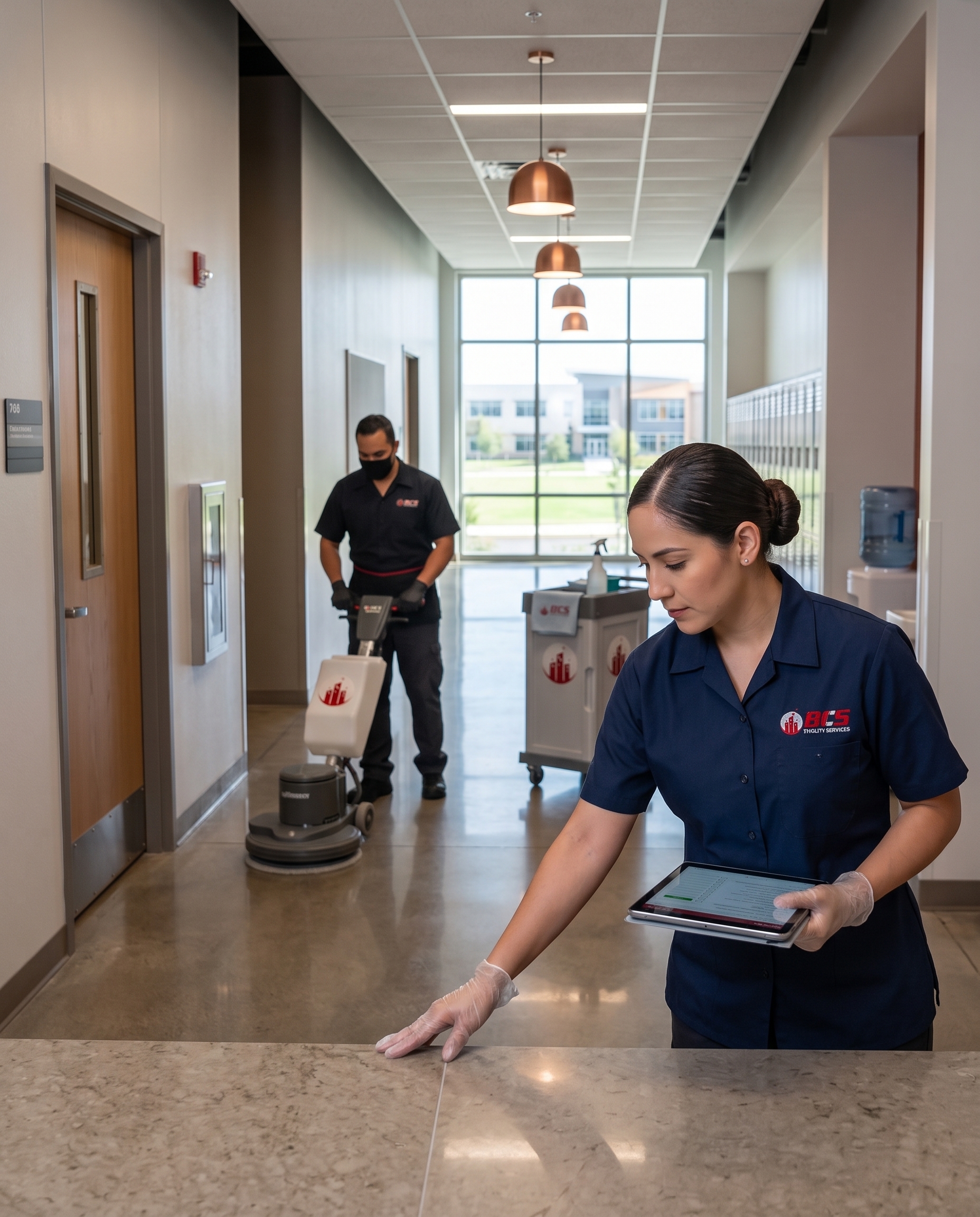
Now walk the same routes students and staff use throughout the day.
Follow the path from:
Entrance → Main Hallway → Classrooms → Restrooms → Shared Areas
As you walk, look down at floor edges, along corners, underneath furniture, and around doorways.
This approach can reveal something a stationary inspection may miss: how well the cleaning routine is handling the areas that receive constant movement.
The “Hands” Check
Next, forget about floors for a moment.
Focus on the surfaces people touch.
Door handles, push plates, stair rails, switches, counters, and shared equipment should be reviewed according to the school’s cleaning schedule.
A surface does not have to look dirty to deserve attention. High-use areas should have clearly defined cleaning expectations.
The “Low and High” Check
Facility teams often notice what is directly in front of them.
A better inspection deliberately looks in two directions.
Look low:
Check beneath desks, chairs, benches, cabinets, and other movable furniture for accumulated debris.
Look high:
Inspect ledges, cabinet tops, vents, door frames, and other elevated surfaces for dust.
Not every elevated or hidden surface requires daily cleaning. The important point is that these areas have a defined place in the overall cleaning plan.
Give Restrooms Their Own Scorecard
Restrooms should not be treated as just another room.
Inspect the condition of fixtures, floors, mirrors, dispensers, partitions, sinks, and frequently touched surfaces. Look for water residue, unpleasant odors, overflowing bins, empty supplies, and areas that appear to receive inconsistent attention.
If the same issue appears repeatedly, document it rather than simply asking the cleaner to “do better.”
Specific information makes corrective action easier.
Test the Shared Spaces
Now move into spaces with specialized uses.
A cafeteria, gym, library, science room, staff area, and administrative office may all require different cleaning methods.
Ask:
Is the cleaning method appropriate for what happens here?
A cafeteria may need attention to food residue. A gym may require a particular floor-care routine. An office containing sensitive equipment may require controlled cleaning around electronics.
One universal cleaning routine rarely fits every part of a school.
The Forgotten-Surface Sweep
At the end of the inspection, deliberately search for the surfaces people rarely mention.
Check behind doors.
Look around trash containers.
Inspect corners.
Look beneath furniture.
Check stairwell edges.
Examine areas around drinking fountains.
These locations can reveal whether the cleaning crew is following a complete route or simply addressing the most visible surfaces.
Turn Problems Into Evidence
Avoid inspection notes such as:
“Hallway needs cleaning.”
Instead, document:
“Dust and debris visible along the east hallway edges near Rooms 104–108.”
The second observation identifies what, where, and what needs attention.
That makes follow-up easier for both the facility team and the cleaning contractor.
Look for Repeat Offenders
A single missed task may happen.
A recurring issue deserves investigation.
If the same restroom develops an odor every week, the same hallway collects debris, or classroom floors repeatedly show buildup, facility managers should ask why.
Possible factors can include cleaning frequency, traffic, staffing, equipment, cleaning methods, or an underlying building condition.
Burgos Cleaning can work with facility teams to establish clear routines and address recurring cleaning concerns based on the actual needs of the school.
Finish With One Final Question
Before closing the inspection, step back and look at the building as a whole.
Ask:
“Does the current cleaning result match the standard we agreed to?”
If the answer is yes, document it.
If the answer is no, identify the exact gap.
That simple distinction turns an inspection from a criticism exercise into a management tool.
The Goal Isn’t a Perfect Inspection
A school building is constantly changing. Students move through it, weather affects entrances, activities create additional mess, and certain spaces experience heavier use than others.
The purpose of an inspection is not to pretend those variables do not exist.
It is to create a consistent way to recognize them, respond to them, and improve the cleaning process.
For Newington facility teams, a well-structured inspection can make school cleaning in Newington easier to evaluate, easier to communicate, and more consistent from one service visit to the next.
With Burgos Cleaning, the focus can remain on practical cleaning standards that reflect how the school actually operates—not simply how it looks on paper.