
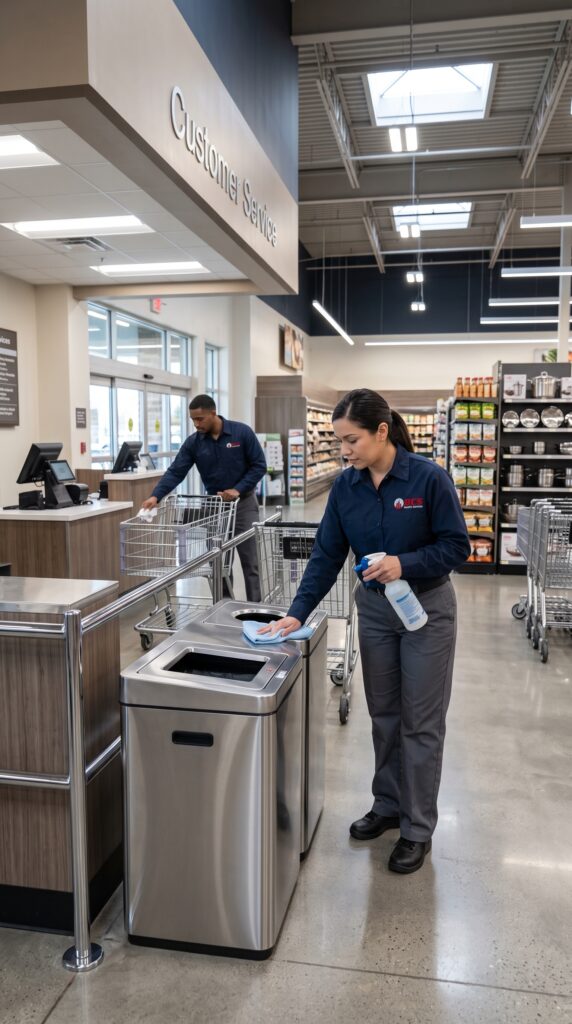
An unpleasant smell can change how a customer experiences a retail store before they even reach the checkout counter. Unlike visible dirt, an odor can travel through several areas and make it difficult to identify where the problem began.
Effective retail odor management starts with treating the smell as a clue rather than simply something that needs to be covered with fragrance. The source, location, timing, and surrounding conditions can all provide useful information.
The Smell Has a Starting Point
When an odor is noticed, begin by narrowing down its location.
Walk from the area where the smell is strongest toward nearby rooms, storage areas, restrooms, employee spaces, and service entrances. The strongest point may reveal more than the location where customers first notice the odor.
This approach makes retail odor management more targeted. Instead of applying deodorizing products throughout the store, staff can investigate the specific area where the condition appears to originate.
Waste Areas Tell a Story
Trash containers are an obvious source, but the container itself may not always be the entire problem.
Food residue can remain inside liners or around the surrounding floor. Cardboard and packaging may also absorb moisture and develop odors when stored in unsuitable conditions.
For Canton retailers, waste areas can therefore be checked for spills, damaged liners, damp materials, and accumulated residue.
Removing waste on schedule and cleaning the surrounding surfaces can form an important part of retail odor management.
Look Below the Surface
Some odors are associated with moisture rather than visible dirt.
A damp section of carpet, a wet mop area, a floor drain, or moisture beneath equipment can create a persistent smell. If the odor returns shortly after cleaning, the underlying condition may deserve closer inspection.
Cleaning teams can document recurring locations and notify facility managers when a possible moisture, plumbing, or building-related issue requires specialized attention.
This prevents retail odor management from becoming a cycle of masking the same unresolved condition.
Restrooms Need a Different Approach
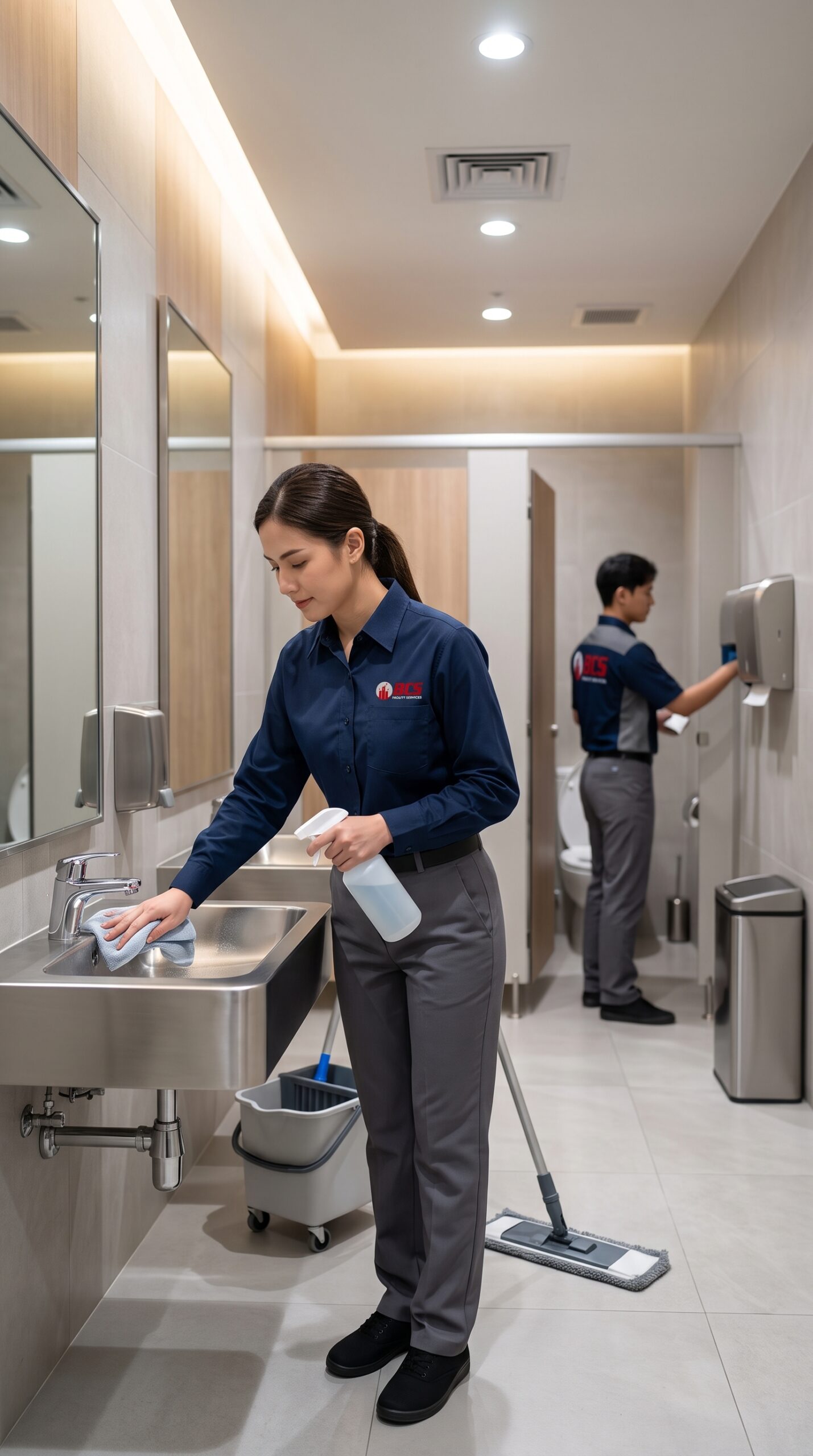
Restroom odors can have several potential sources, including waste containers, floor residue, drains, fixtures, and areas around toilets.
Rather than relying solely on stronger fragrances, routine service should address the surfaces and locations contributing to the odor.
A restroom that develops an odor repeatedly at a particular time may also require a review of usage patterns and service timing.
That information can help managers refine their retail odor management routine according to actual conditions.
Don’t Ignore Employee Areas
Breakrooms and staff spaces can produce odors that eventually travel into other parts of a store.
Food containers, refrigerators, sinks, waste bins, and damp towels are common places where odors may originate.
These spaces benefit from clear responsibilities for removing food waste, cleaning spills, checking appliances, and maintaining surrounding surfaces.
For retail odor management, employee areas deserve the same attention as customer-facing spaces because air movement can carry smells beyond their original location.
Consider the Building’s Airflow
An odor that appears in one room may actually originate somewhere else.
Air movement can carry smells from restrooms, storage areas, breakrooms, loading areas, or waste locations into customer spaces.
Facility teams can note when and where odors appear and compare those observations with ventilation patterns, door positions, or nearby activities.
If a problem appears connected to HVAC equipment or another building system, qualified maintenance personnel should evaluate it rather than treating it solely as a cleaning issue.
Build a Simple Odor Log
A small record can make recurring problems easier to investigate.
Note:
- Where the odor was noticed
- What it smelled like
- When it appeared
- Nearby activities
- Weather or moisture conditions
- Actions taken
- Whether the odor returned
This information can reveal patterns that are difficult to identify from isolated complaints.
Burgos Cleaning approaches commercial cleaning by considering the specific conditions of each facility rather than assuming every location requires the same routine.
Connect Odor Control With Routine Cleaning
A consistent retail cleaning in Canton routine can help address conditions that contribute to unwanted odors. Floors, restrooms, waste areas, breakrooms, entryways, and other frequently used spaces can be incorporated into a service plan based on how the store operates.
Regular cleaning does not replace investigation when an odor has a plumbing, moisture, ventilation, or equipment-related source. Instead, it provides a foundation for identifying changes and recurring conditions.
Make the Solution Match the Source
The most useful retail odor management strategy is one that addresses the reason an odor develops.
That may involve more frequent waste service, better attention to damp surfaces, improved restroom routines, cleaning around equipment, or referring plumbing and ventilation concerns to qualified professionals.
At Burgos Cleaning, we approach retail facility care by looking beyond the surface and considering where recurring conditions begin, how they move through the building, and what type of service is appropriate for the situation. A source-focused approach can help Canton retail facilities create a cleaner and more comfortable environment for customers and staff.