
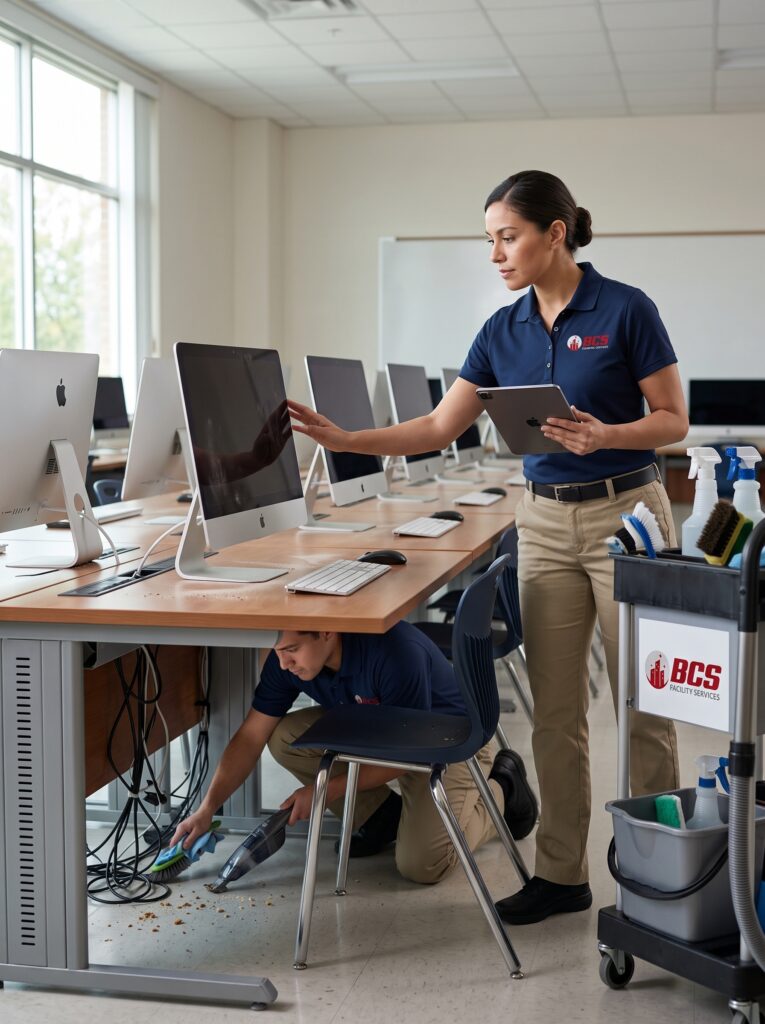
A cleaning issue that appears once may simply require attention. When the same issue returns in the same hallway, restroom, classroom, or cafeteria, however, it deserves a closer look.
Repeated cleaning problems can point to a mismatch between a building’s usage patterns and its cleaning routine. Instead of treating each occurrence as a separate task, school facility teams can examine what happens before, during, and after the problem appears.
Start With the Pattern
The first question is not “How do we clean this?” but “Where and when does this happen?”
A restroom may develop the same floor condition every afternoon. A hallway may collect debris shortly after dismissal. A classroom may repeatedly have marks around a particular entrance.
Recording the location and approximate time can turn repeated cleaning problems into useful information.
A simple log might include:
- Location
- Type of problem
- Approximate time
- Frequency
- Activity occurring nearby
- Cleaning response
After several entries, a pattern may become easier to identify.
Separate the Symptom From the Cause
A visible problem is not always caused by the cleaning process itself.
For example, recurring debris near a doorway could be related to outdoor traffic, weather, or the movement of equipment. A restroom that repeatedly requires additional attention may experience unusually high use during certain periods.
This distinction matters because repeated cleaning problems cannot always be solved by simply adding more cleaning.
The better response may involve changing placement, timing, equipment, or communication between facility staff and the cleaning team.
Try a Timing Adjustment
Sometimes the cleaning method is appropriate, but the timing is not.
Consider a corridor that receives heavy student movement immediately after a cleaning shift. The surface may appear satisfactory when the team finishes, but conditions can change rapidly once students return.
For school cleaning in West Hartford, facility managers can compare service times with class changes, lunch periods, athletic activities, assemblies, and after-school programs.
If a problem consistently develops after a specific activity, the cleaning schedule may need to account for that activity rather than simply increasing the overall service frequency.
Give Problem Areas Their Own Instructions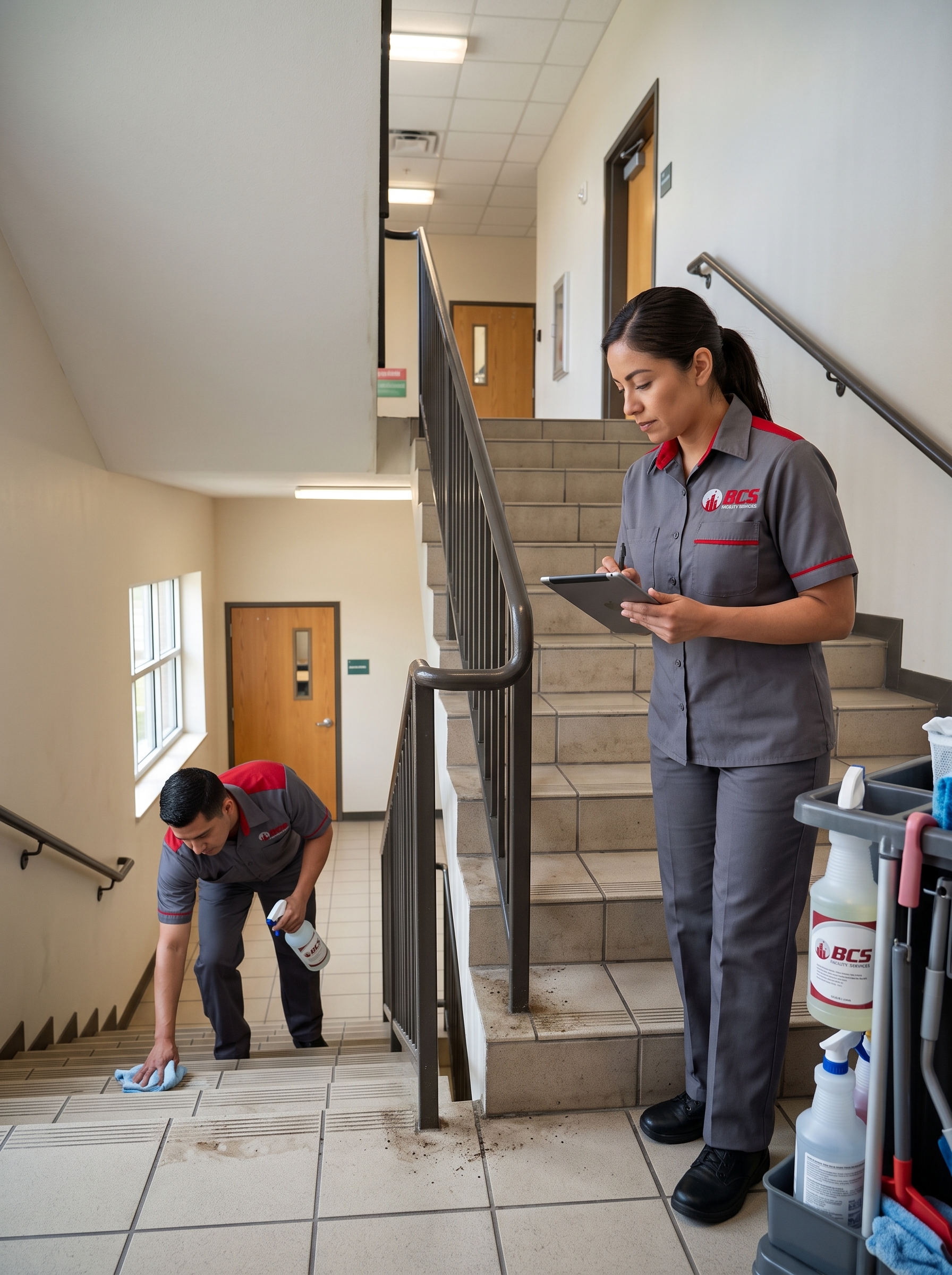
Not every part of a school needs the same approach.
A cafeteria floor, science classroom, administrative office, and gymnasium can experience completely different types of recurring issues.
Instead of adding vague instructions such as “clean thoroughly,” facility teams can identify the exact requirement for each problem area.
For example:
Cafeteria: inspect beneath tables after lunch.
Entryway: address tracked-in material after peak arrival periods.
Restroom: check fixtures and floors during high-use periods.
Gym: inspect floor edges after scheduled activities.
Specific instructions make repeated cleaning problems easier to communicate and track.
Change One Variable at a Time
When several changes are introduced simultaneously, it becomes difficult to determine which adjustment made a difference.
If a recurring issue continues, try modifying one factor first. The team might change the service time, alter the cleaning method, assign an additional inspection, or introduce a different piece of equipment.
Then observe the area over several service cycles. cleaning program.
Build Feedback Into the Routine
Teachers, custodial staff, administrators, and facility managers may notice different parts of the same issue.
A teacher may recognize when a classroom begins experiencing a problem. A custodian may identify a recurring surface condition. A facility manager may notice that the issue corresponds with a particular schedule.
This information can provide useful context when evaluating repeated cleaning problems. Instead of relying on one person’s observation, facility teams can combine feedback from people who interact with different parts of the building.
Burgos Cleaning approaches school cleaning with attention to these practical details, helping cleaning routines account for the way educational facilities are actually used.
Review What Changed
Once an adjustment has been made, record what happened afterward.
Did the problem occur less often? Did it move to another location? Did the same issue return under different circumstances?
This final step turns repeated cleaning problems into a continuous improvement process. Rather than simply responding every time the same condition appears, West Hartford schools can build a clearer understanding of their buildings and create cleaning routines that respond to actual patterns.
At Burgos Cleaning, we approach school cleaning with practical service routines that consider recurring conditions, facility use, and the specific needs of each educational environment.