
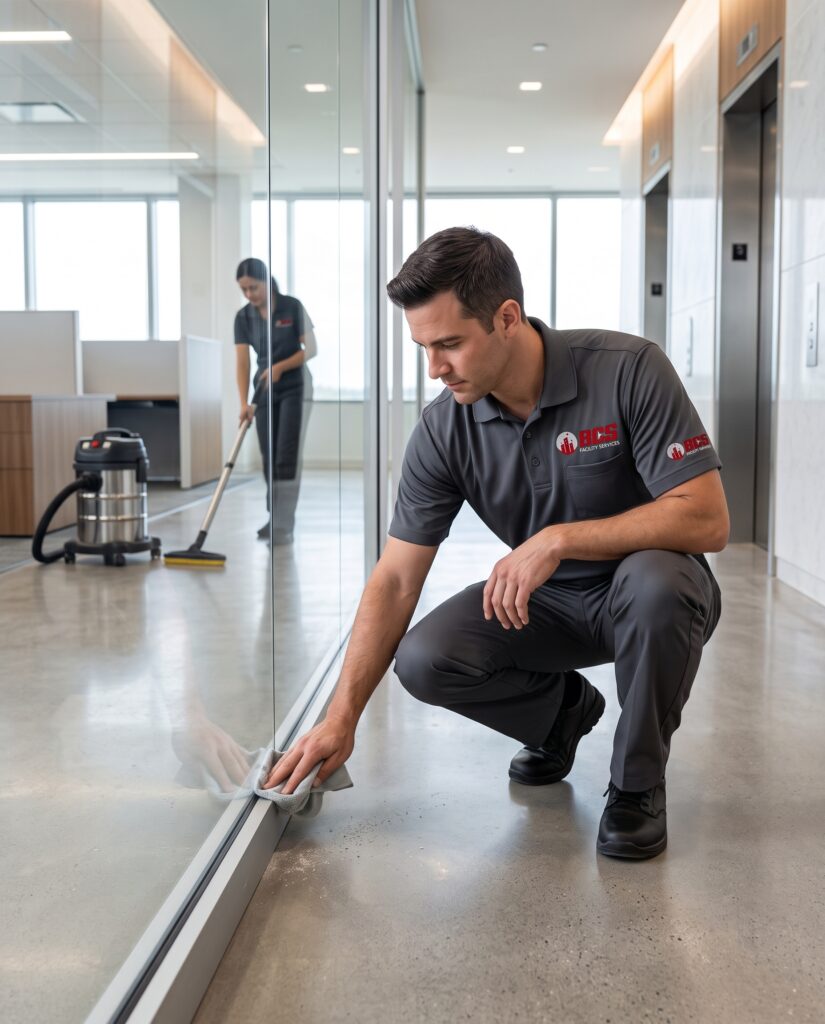
The final two days of a building project can change the character of a property quickly. Tools are being removed, contractors are finishing installations, construction materials are leaving the site, and completed areas are beginning to look more like the finished space they were designed to become.
But even when the major work is complete, there can still be plenty left to address.
This is where final cleanup becomes an important part of the project schedule. Rather than treating it as a quick sweep at the end, the final cleanup stage should coordinate with the last construction activities so the property can move smoothly from active worksite to usable space.
48 Hours Before Handover: Establish the Finish Line
The first question is simple: When will construction activity actually stop?
Detailed cleaning can be difficult to complete while workers are still sanding, drilling, painting, cutting materials, or installing fixtures. New activity can introduce dust and debris into areas that were already addressed.
At this point, the project team should identify which areas are complete and which areas still require construction work.
That distinction creates a practical starting point for the final cleanup.
36 Hours Before Handover: Follow the Construction Traffic
Not every part of a building experiences construction in the same way.
Workers and materials usually follow specific routes through entrances, hallways, stairways, storage areas, and work zones. Those routes can accumulate more dirt and debris than areas with limited activity.
Instead of relying only on a standard cleaning sequence, walk through the building based on how construction actually happened.
Check the places where materials entered the property. Look at pathways used to transport equipment. Examine areas surrounding newly installed features.
This approach can reveal cleanup needs that a quick visual inspection may miss.
24 Hours Before Handover: Separate Cleaning From Repairs
The final stage can become confusing when every unfinished detail is treated as a cleaning issue.
Some problems require a contractor rather than a cleaning crew. A damaged fixture, unfinished installation, chipped surface, or construction defect may need correction before cleaning can be considered complete.
Other items simply need removal.
Packaging, protective coverings, labels, tape, and leftover construction materials may no longer have a purpose once installation is finished.
Then there are completed surfaces that simply require detailed cleaning.
Separating these three situations—repair, removal, and cleaning—helps prevent unnecessary delays during the final hours.
18 Hours Before Handover: Look for Small Traces
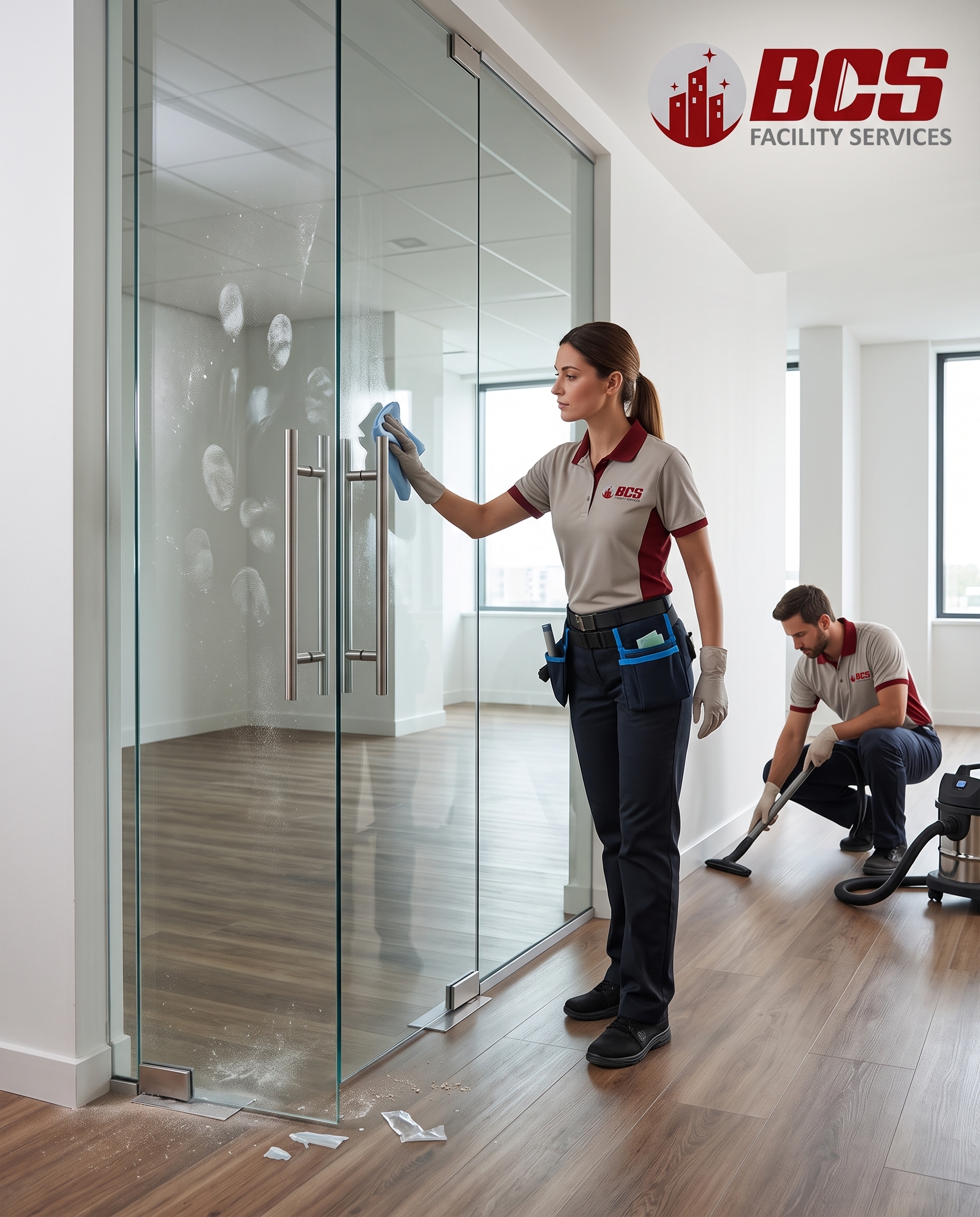
Once large debris has been removed, smaller construction remnants become easier to identify.
Fine dust can settle along trim and ledges. Fingerprints may remain around doors and fixtures. Installation residue can appear near newly fitted materials. Glass can carry marks from repeated handling.
These details may have been insignificant while construction was underway, but they become much more noticeable when the building is nearly empty.
This is when final cleanup shifts from broad debris removal toward detailed surface attention.
12 Hours Before Handover: Change Your Perspective
A useful final inspection does not have to resemble a construction inspection.
Walk into the building as though you were an employee, customer, tenant, client, or visitor arriving for the first time.
Look at the entrance.
Walk through the main traffic areas.
Check windows and glass from different angles.
Examine floors, doors, handles, counters, cabinets, fixtures, and visible edges.
Lighting can reveal marks that are difficult to notice from a distance. Natural daylight may expose fingerprints on glass, while overhead lighting can highlight dust along surfaces.
The goal is to identify what someone will notice when they encounter the completed property.
6 Hours Before Handover: Complete the Cleaning Stage
For projects requiring post-construction cleaning in Tolland, this is the point where professional cleaning can help bring the property toward its finished presentation.
The scope will vary according to the size and type of project. Cleaning may involve construction dust and debris removal, floor care, glass cleaning, adhesive residue removal, fixture detailing, and attention to completed architectural surfaces.
Burgos Cleaning can support this stage by handling cleaning needs after major construction or renovation work has been completed. Its approach can address the dust, debris, residue, and other remnants that remain after active construction, helping create a cleaner transition from jobsite to finished property.
Working with a cleaning provider during this stage also allows the project team to focus on final construction responsibilities while cleaning professionals address the remaining cleaning details.
The Final Hours: Review the Whole Space
The last inspection should not focus on one surface or one room.
Instead, consider the property as a complete environment.
Are construction materials gone?
Have completed areas received their final attention?
Are visible surfaces free of construction residue?
Can people enter the building without immediately noticing evidence of the work that took place?
These questions help determine whether the final cleanup has achieved its real purpose.
When Construction Becomes the Background
The last 48 hours are about more than removing dust and debris.
They mark the transition between construction and occupancy.
Contractors finish their responsibilities. Unnecessary materials leave the property. Cleaning addresses the remaining traces of construction. The project team then evaluates the building as a finished environment.
For a Tolland building project, planning final cleanup as its own stage can create a more organized path toward handover.
Once the tools are gone, construction residue has been addressed, and the remaining details have received attention, the building can finally take center stage—not the work that was required to create it.