
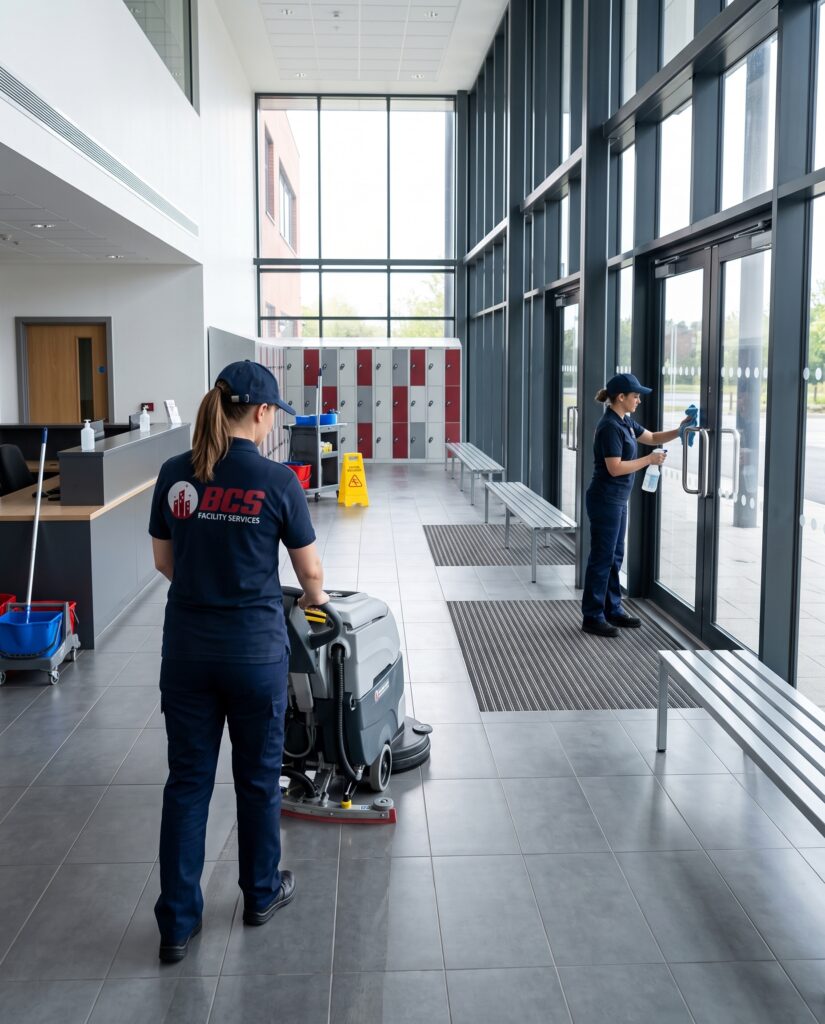
A school building changes throughout the day.
At 7:30 a.m., the entrance may be the busiest point in the building. An hour later, classrooms become the center of activity. Before lunch, hallways fill with students moving between rooms. Later, cafeterias, gyms, and common areas may experience another wave of use.
That movement provides an important clue for school cleaning: student traffic cleaning should follow the rhythm of the building.
Instead of giving every area the same attention at the same time, Meriden schools can organize daily facility upkeep around when and where students actually move.
The School Day as a Cleaning Map
Think of the building as a series of changing traffic zones.
Morning:
Entrances, reception areas, corridors, and frequently used stairways become immediate priorities as students arrive.
Midday:
Classrooms, restrooms, cafeterias, and connecting hallways experience different levels of activity. Cleaning personnel can monitor these areas for spills, waste, and other conditions requiring attention.
Afternoon:
As classes end, traffic shifts again. Athletic spaces, activity rooms, exits, and common areas may receive increased use.
After dismissal:
With fewer people moving through the building, cleaning teams have greater access to classrooms, floors, fixtures, restrooms, and other spaces requiring more detailed service.
This approach turns the school schedule into a practical cleaning map.
Instead of “What Needs Cleaning?” Ask “When Is It Used?”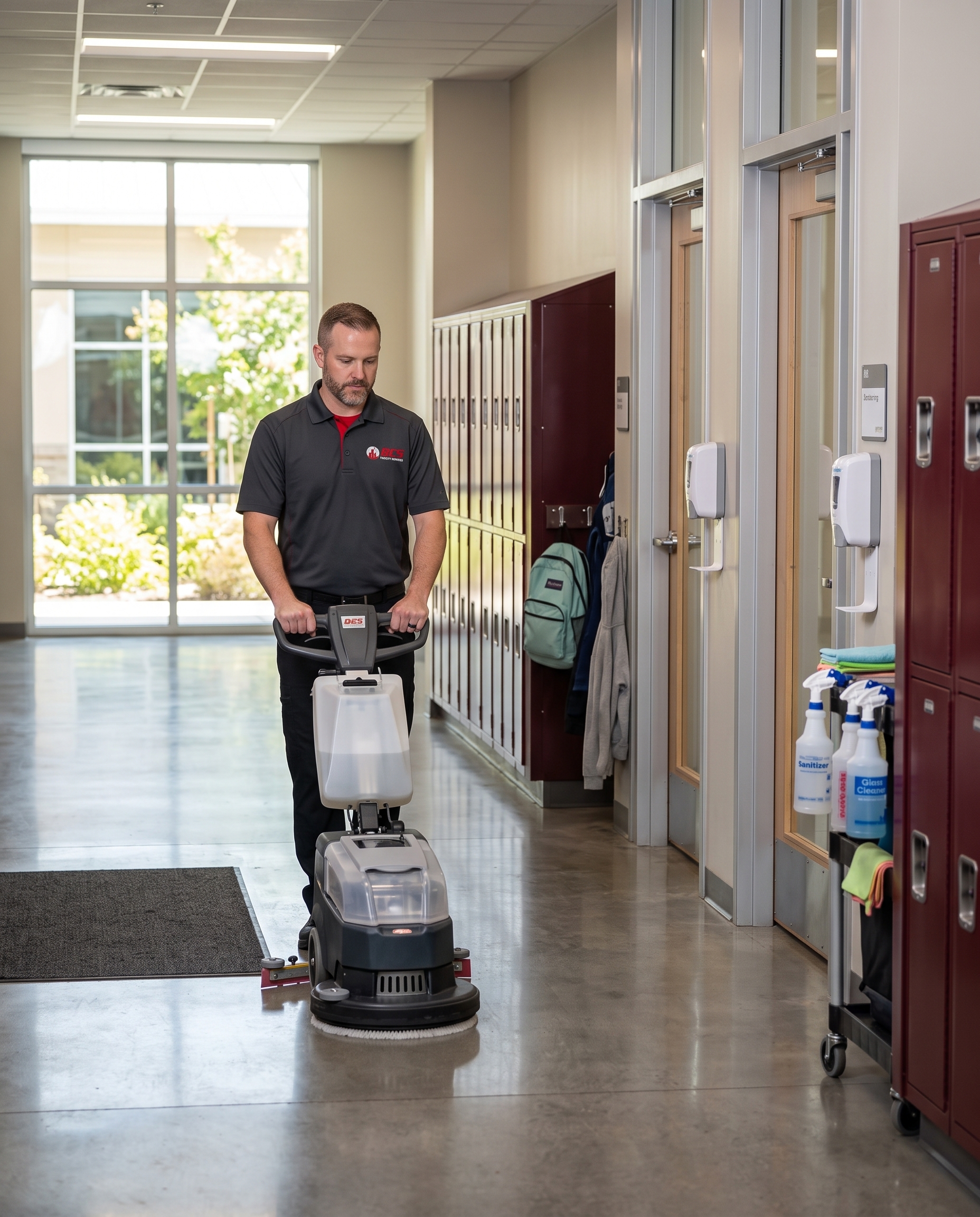
A common facility routine starts with rooms.
A more responsive approach starts with timing.
A hallway that receives hundreds of students during passing periods does not necessarily need the same service at 9:00 a.m. and 2:30 p.m. Likewise, a cafeteria may require a different response immediately after lunch than it does during the first class period.
For Meriden schools, this distinction can help facility teams decide when routine work should happen and when quick-response cleaning should take priority.
The goal is not simply to add more cleaning tasks. It is to place the right task at the right point in the school day.
Create Three Levels of Attention
A simple traffic-based system can divide daily work into three levels.
1. Ready
These are spaces that need to be prepared before students arrive. Classrooms, entrances, restrooms, and major circulation routes can be checked so the building begins the day ready for activity.
2. Respond
These are areas that need attention as the school operates. A spill in a corridor, a full waste container, or an unexpectedly busy restroom may require action before the scheduled cleaning period.
3. Reset
These are spaces that can receive more extensive service after major student activity has ended. Floors, classrooms, cafeterias, common areas, and other heavily used spaces can be returned to their regular condition.
This three-part model gives cleaning personnel a way to prioritize without turning the entire day into one long checklist.
A Meriden Example: Maloney High School
Maloney High School is one of Meriden’s two public high schools serving grades 9–12. The district lists the school at 121 Gravel Street and notes that its high schools have academic and extracurricular activities as well as athletic programs.
That variety of activity demonstrates why a fixed routine may not always reflect how a school is actually being used.
An ordinary school day may have classroom movement, lunch periods, physical education, extracurricular activities, and other scheduled events. Each can alter which parts of a facility experience the greatest traffic.
A practical cleaning plan can account for those changes instead of treating every weekday as identical.
Build the Schedule Around Activity Peaks
Facility managers can identify recurring traffic peaks by looking at the school calendar and daily timetable.
Ask:
- When do students enter the building?
- Which corridors become crowded between classes?
- When does the cafeteria experience its heaviest use?
- Which restrooms receive the most traffic?
- When are gyms and activity spaces occupied?
- What happens after dismissal?
- Are evening activities using the facility?
The answers can guide staffing and task timing.
Meriden Public Schools states that its facilities department is responsible for maintaining school buildings and supporting student and staff functions as well as community events. This makes scheduling around actual building use particularly relevant when schools host activities beyond ordinary classroom hours.
Let the Building Tell You What to Change
A traffic-based routine should not remain unchanged forever.
If one entrance repeatedly collects outdoor debris, the schedule can be adjusted. If a hallway needs attention after a particular passing period, the cleaning window can reflect that. If an evening event changes how a gym or cafeteria is used, the next service period can account for it.
Burgos Cleaning takes this practical approach to school cleaning by providing services for classrooms, hallways, gyms, cafeterias, and other educational spaces. For Meriden facilities, the emphasis can be on creating a service routine that matches the building’s actual use rather than forcing every school into an identical schedule.
Make Daily Upkeep More Predictable
The value of student traffic cleaning is not simply about responding to messes faster. It gives schools a framework for deciding where cleaning attention belongs throughout the day.
When traffic patterns, school schedules, activity periods, and facility needs are considered together, daily upkeep becomes easier to organize.
For Meriden schools, the most useful routine may be one that moves with the students: prepare busy areas before arrival, respond to changing conditions during the day, and reset heavily used spaces when activity winds down.
That creates a cleaning schedule built around the school—not just around a list of rooms.