
A renovation can introduce a wide range of new materials into a property. Fresh flooring, cabinetry, countertops, windows, fixtures, doors, and appliances can dramatically change a room. Yet after installation is finished, small traces from the work may remain on otherwise completed surfaces.
Adhesive marks, protective film, labels, grout haze, caulk smears, dust, and packaging residue can make new finishes appear less polished. Removing these remnants is an important part of the final property cleanup.
Where Installation Residue Commonly Appears
Residue does not always occur in obvious places. During installation, materials may be handled repeatedly, protective coverings may be secured with adhesives, and finishing products may spread beyond their intended areas.
Common examples include:
- Adhesive left behind after labels or protective films are removed
- Grout haze on newly installed tile
- Caulk or sealant around fixtures and trim
- Tape residue on glass, cabinetry, or finished surfaces
- Dust embedded around flooring edges
- Fine particles around newly installed hardware
- Construction marks on doors and baseboards
- Packaging fragments in cabinets, drawers, or corners
Each type of residue may require a different cleaning method.
Why Removing Residue Requires Care
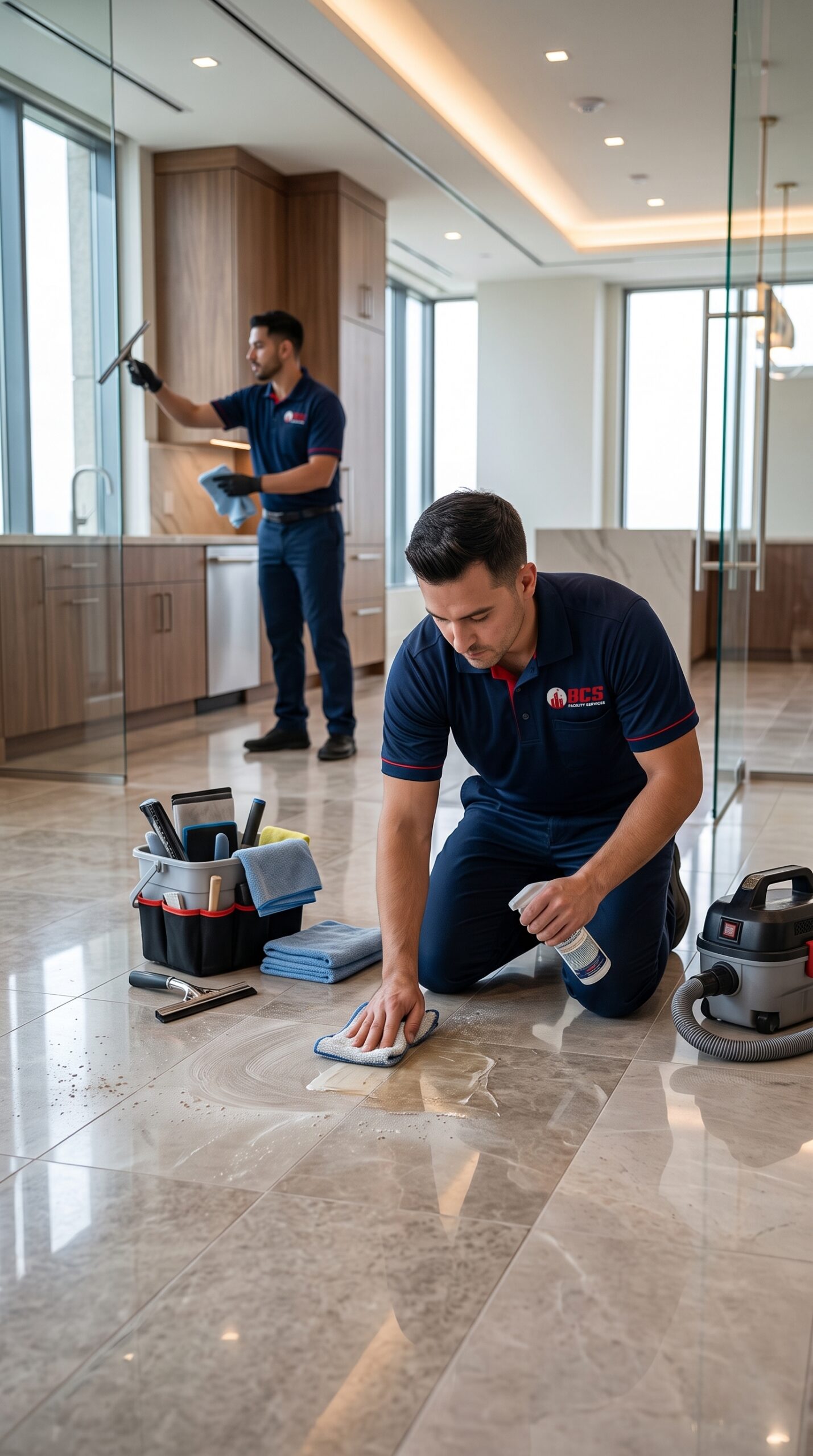
Newly renovated surfaces can be more vulnerable to improper cleaning techniques. Scraping too aggressively can damage a finish, while using an unsuitable chemical can discolor or dull a surface.
The appropriate approach depends on the material involved and the type of residue being removed. Glass, tile, hardwood, painted surfaces, stainless steel, laminate, and stone may all have different care requirements.
Rather than treating every mark the same way, professional cleaners can assess the surface and select an appropriate cleaning process.
Adhesive Is One of the Most Common Challenges
Adhesive residue can remain after manufacturers’ labels, protective coverings, tape, or temporary installation materials are removed.
A small amount may initially be difficult to notice, but fingerprints and dust can collect on sticky areas over time. Windows, appliances, cabinetry, trim, and other newly installed features can all be affected.
Removing adhesive carefully helps restore the intended appearance of the finished surface without unnecessarily damaging the material underneath.
Tile and Flooring May Need Specialized Attention
Renovated properties frequently contain newly installed tile or flooring. Installation can leave behind grout haze, fine dust, adhesive, or other residue.
The cleaning method should reflect the type of material and the nature of the residue. A process suitable for ceramic tile may not be appropriate for hardwood or another flooring material.
Burgos Cleaning offers construction cleaning services that include floor care and detailed cleaning following renovation and construction projects.
A Final Cleaning Can Address Overlooked Installation Areas
For property owners arranging post-construction cleaning in Rocky Hill, installation residue can be included among the areas requiring attention after the primary construction work has finished.
This final stage may involve examining cabinets, windows, doors, floors, trim, fixtures, and other newly installed elements. Looking at the property as a finished whole can help identify small remnants that may have been overlooked during individual installation tasks.
Windows and Fixtures Deserve Extra Attention
New windows, mirrors, lighting fixtures, faucets, handles, and other hardware can collect fingerprints and installation marks. Protective stickers and labels may also leave behind small traces.
Cleaning these features carefully can help restore a uniform appearance throughout the property. Glass in particular can reveal smudges and residue under natural or artificial light, making it worthwhile to inspect it from different angles.
When Should Installation Residue Be Removed?
The final cleanup is best coordinated with the project’s completion schedule. Major installation, sanding, painting, and other dusty activities should generally be finished before detailed cleaning begins.
For larger projects, cleaning may be divided into stages. An initial cleanup can address heavier construction debris, while a later detailed service can focus on finished surfaces and remaining installation residue.
Giving Newly Renovated Properties a Finished Appearance
A renovation is made up of hundreds of individual tasks, and the smallest remnants can sometimes distract from the completed result. Removing installation residue gives new materials a cleaner presentation while helping property owners transition from construction to normal use.
For homeowners, contractors, and property managers in Rocky Hill, Burgos Cleaning can provide detailed construction cleaning tailored to the condition of a newly renovated property.
From adhesive traces and grout haze to dust around trim and fingerprints on glass, addressing these final details can give a renovation the clean finish it deserves.